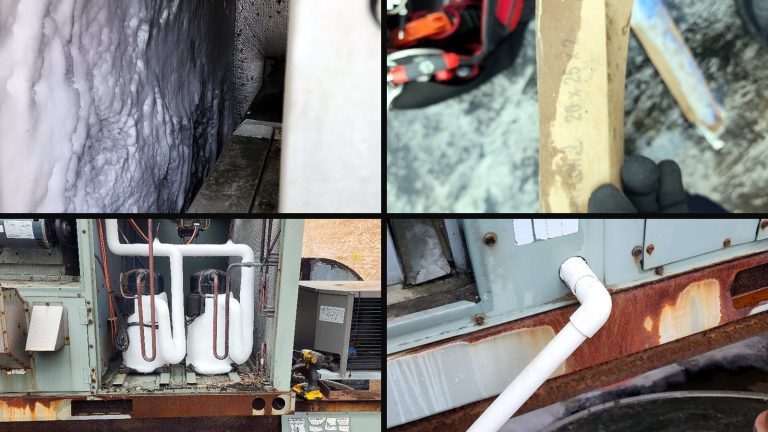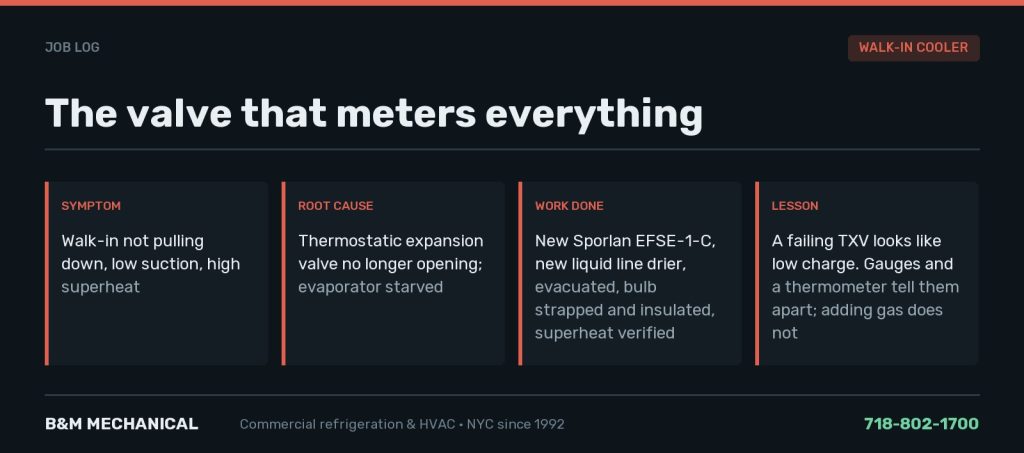
A catering kitchen’s walk-in wasn’t pulling down. Compressor running on the roof, box sitting warm, and the gauges said the evaporator was being starved: low suction, high superheat.
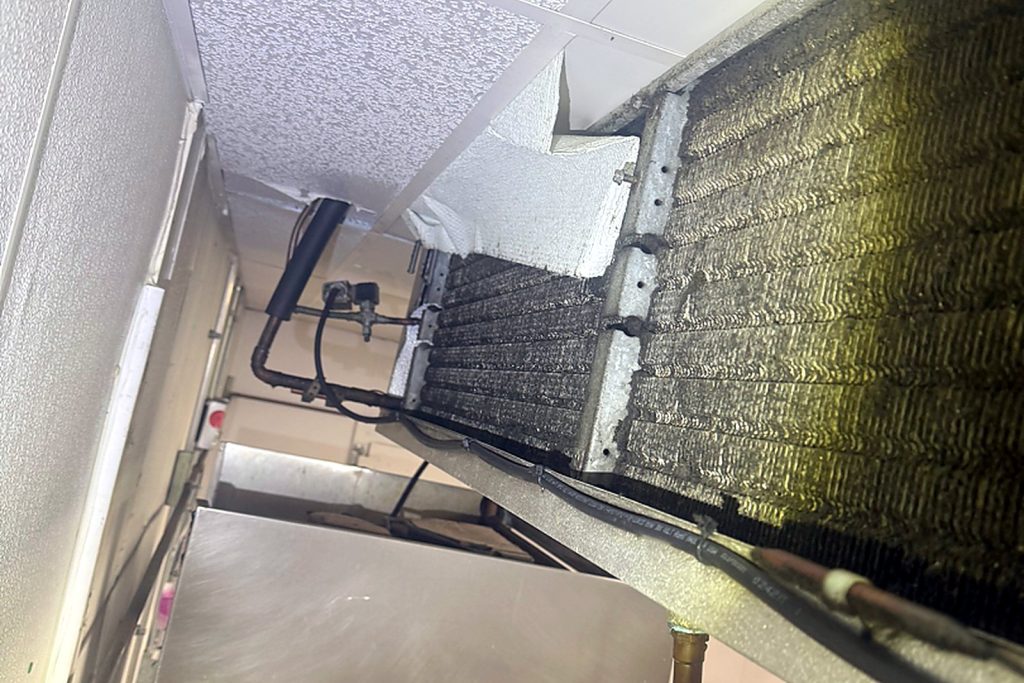
That combination points at one part. The thermostatic expansion valve is the metering device at the inlet of the evaporator. It feeds exactly as much liquid refrigerant as the coil can boil off, no more, no less, and it does that by sensing the temperature at the coil outlet through a bulb strapped to the suction line.
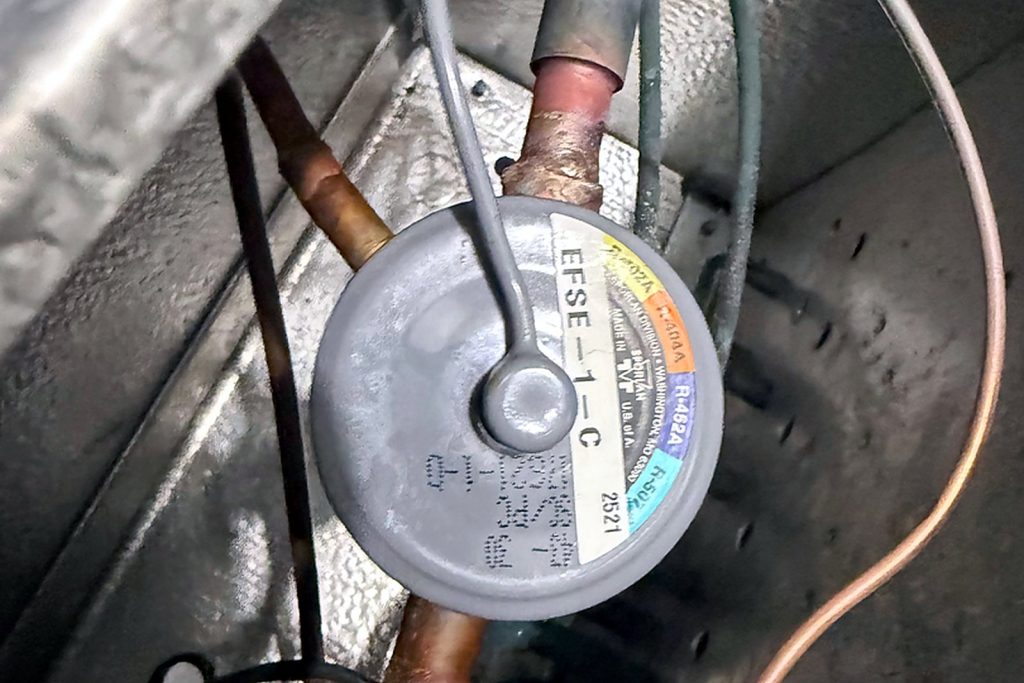
When the valve’s power element loses its charge, or the pin sticks, it stops opening. The coil gets a trickle. The first rows frost, the rest run dry, and the compressor pulls on a near-empty evaporator. To the kitchen staff it’s just a warm box.
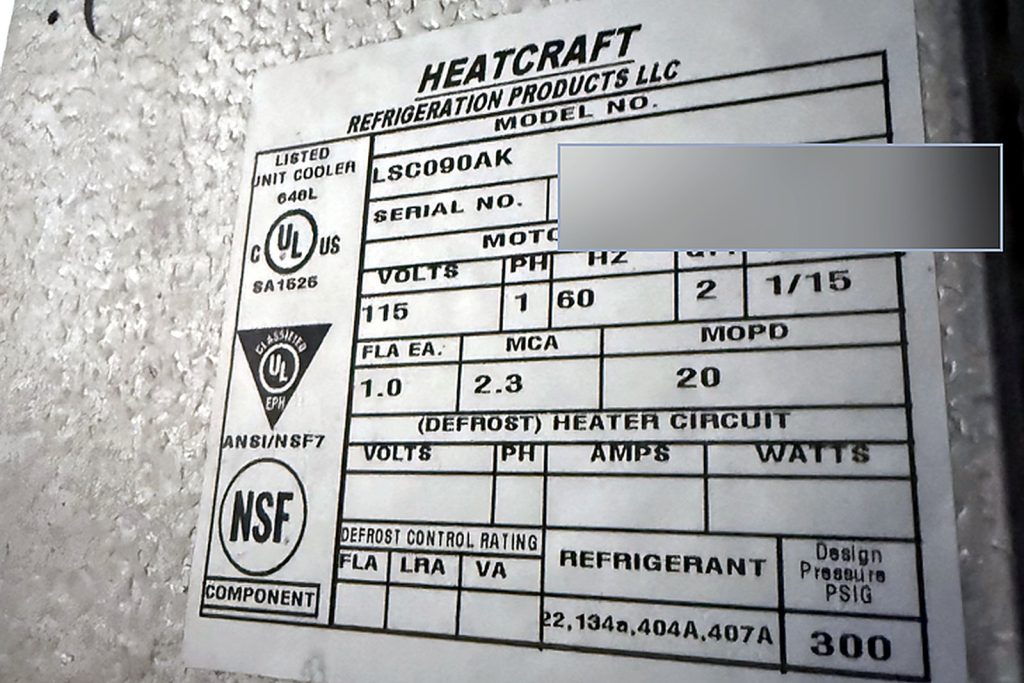
This one was a Sporlan EFSE-1-C, a one-ton R-404A valve with an external equalizer, feeding a Heatcraft LSC090AK low-profile unit cooler. Same valve back in, new drier on the liquid line, system evacuated, bulb strapped and insulated on the suction line at the correct position, then superheat checked once it settled.
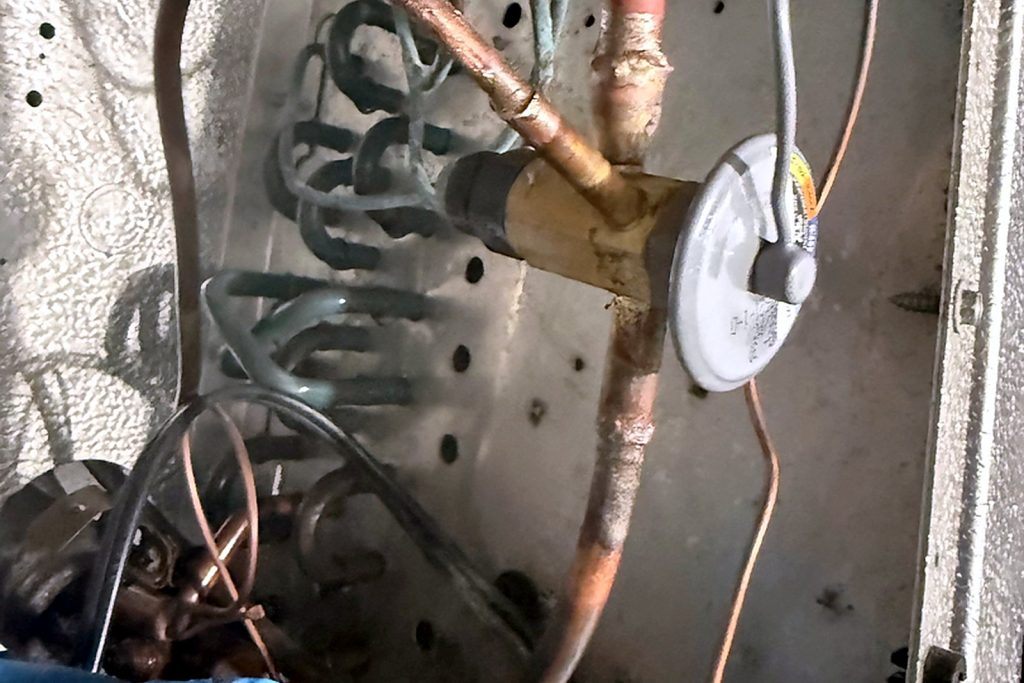
The bulb placement is the part people rush. Strapped loose, or on top of the line, or sitting in a draft, and the valve is reading the wrong temperature and metering wrong from day one. Ten extra minutes there saves a callback.
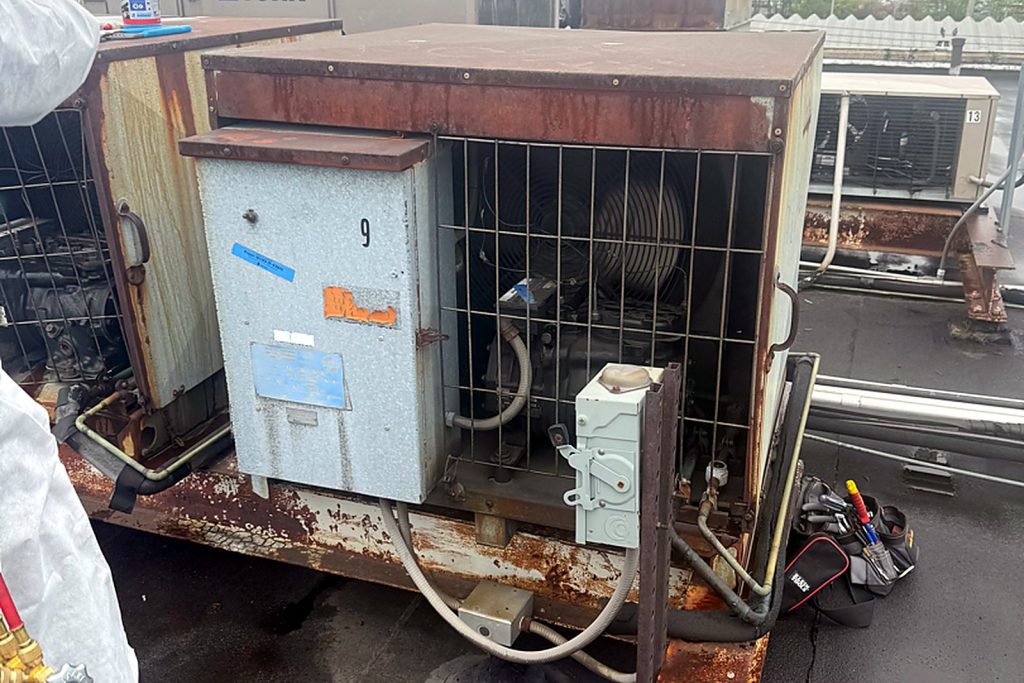
The condensing unit that feeds it sits on the roof, which is where the day started.
A TXV isn’t a part you can see failing. It shows up as a symptom that looks like low charge. Gauges and a thermometer tell them apart. Guessing and adding gas does not.
If it heats or cools, we handle it. 📞 718-802-1700
Service: Walk-in cooler and freezer repair.
This job is part of a case study: Catering kitchen: the walk-in that would not pull down, then the 15-ton rooftop unit.