
Catering kitchen: the walk-in that would not pull down, then the 15-ton rooftop unit
- Scope
- Walk-in refrigeration repair, then planned maintenance on the building’s 15-ton packaged rooftop unit and the walk-in unit cooler fan motors
- Timeline
- Two visits, a few days apart
- Tonnage
- 15-ton packaged rooftop unit (two R-410A circuits); 1-ton walk-in expansion valve
- Location
- New York City
- Year completed
- 2026
- What was delivered
-
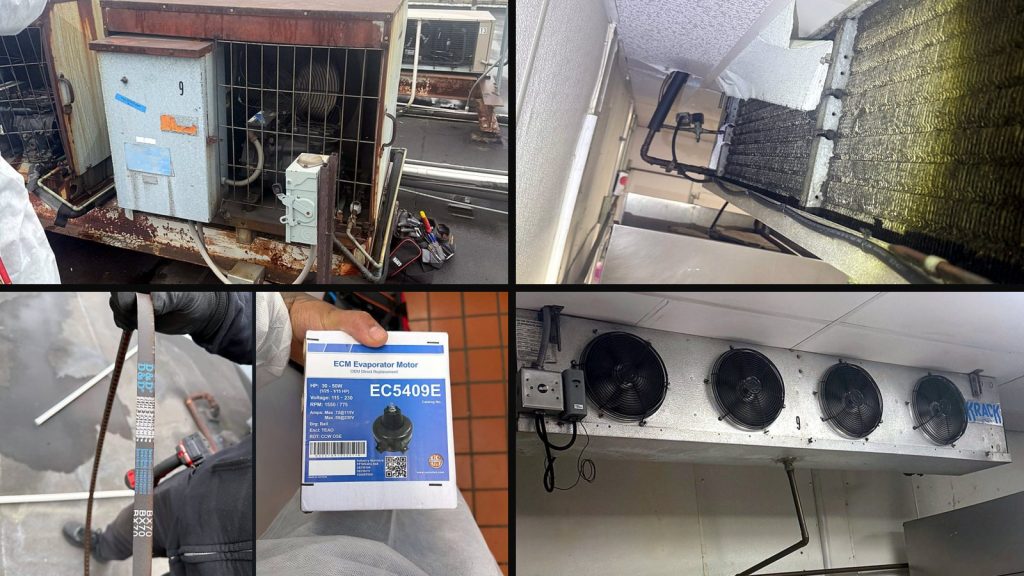
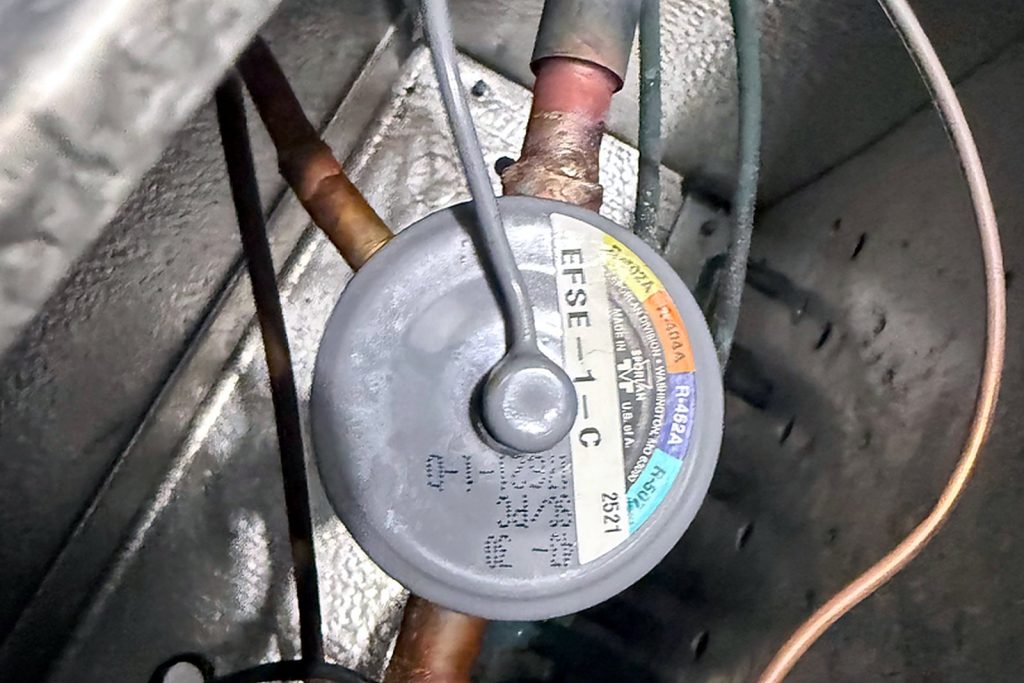
- Sporlan EFSE-1-C expansion valve replaced like for like, new liquid-line drier, system evacuated
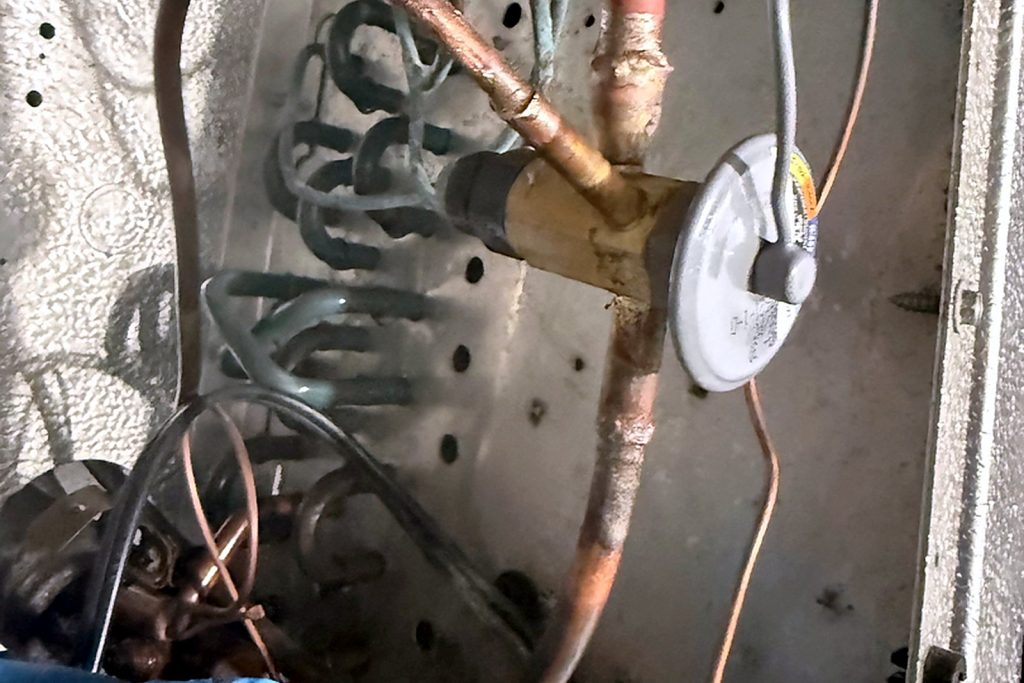
- Bulb strapped and insulated at the correct position on the suction line, superheat checked after settling
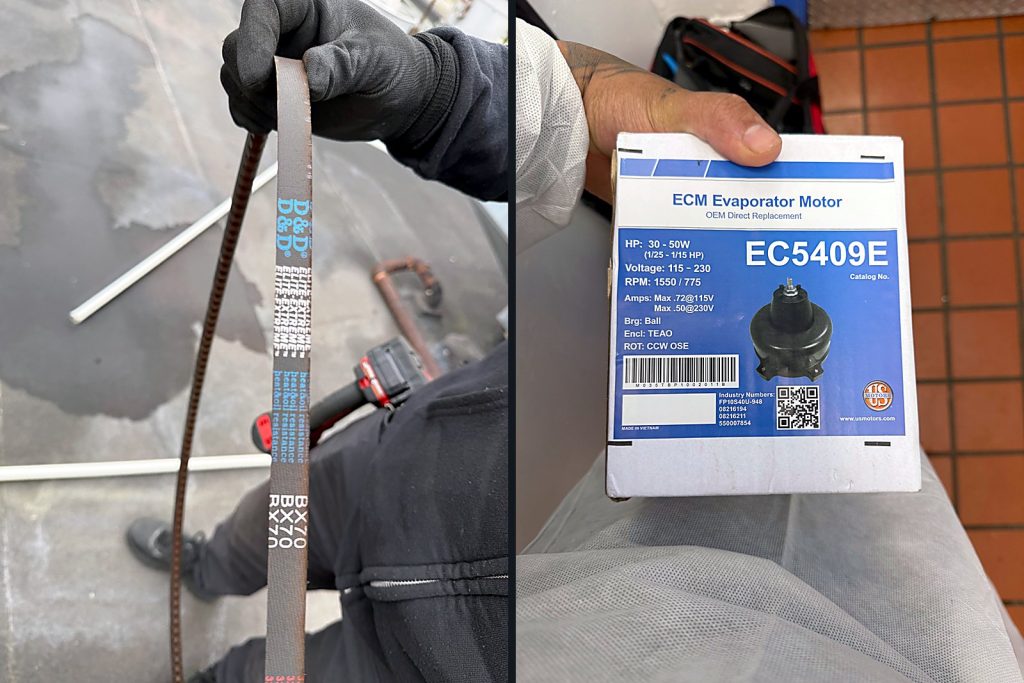
- New BX70 blower belt fitted and tensioned on the rooftop unit
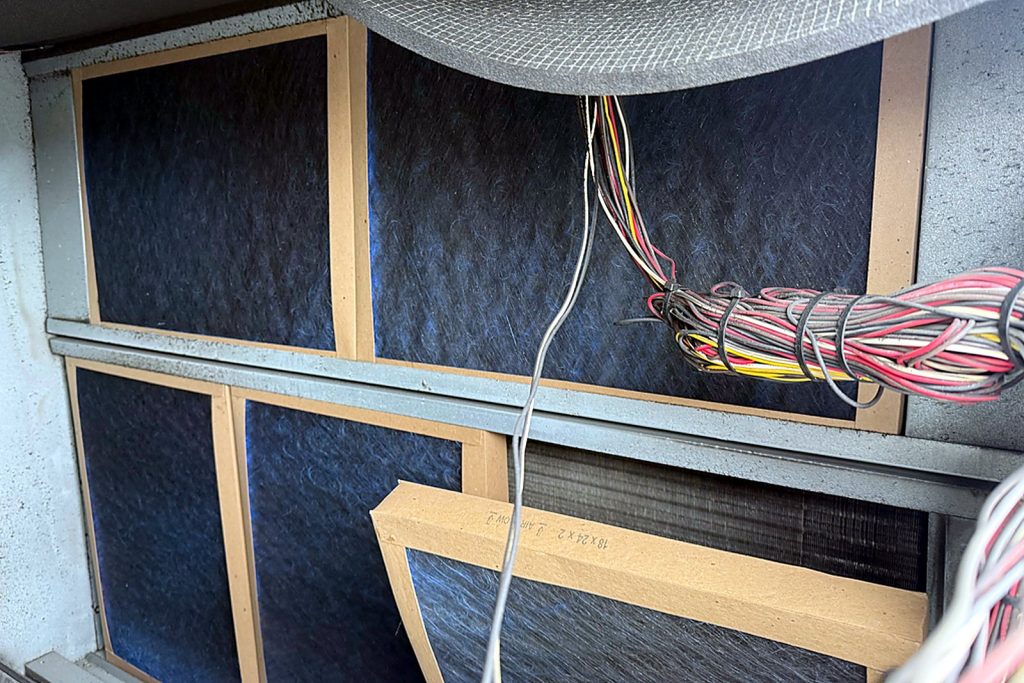
- Full rack of 18x24x2 pleated filters
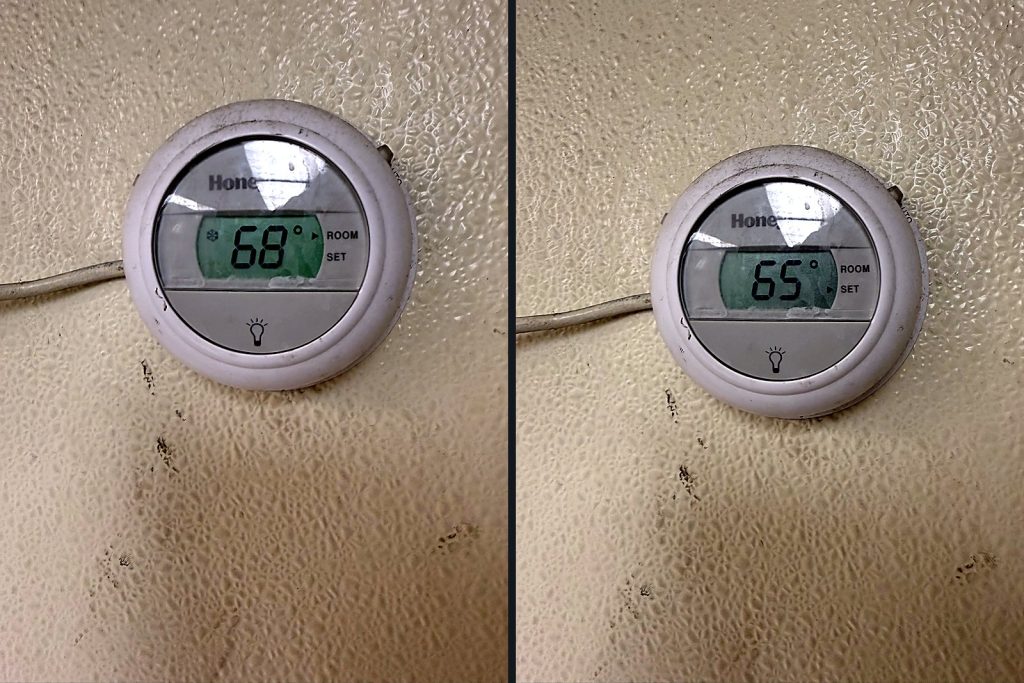
- Kitchen thermostat and supply air checked with the unit running
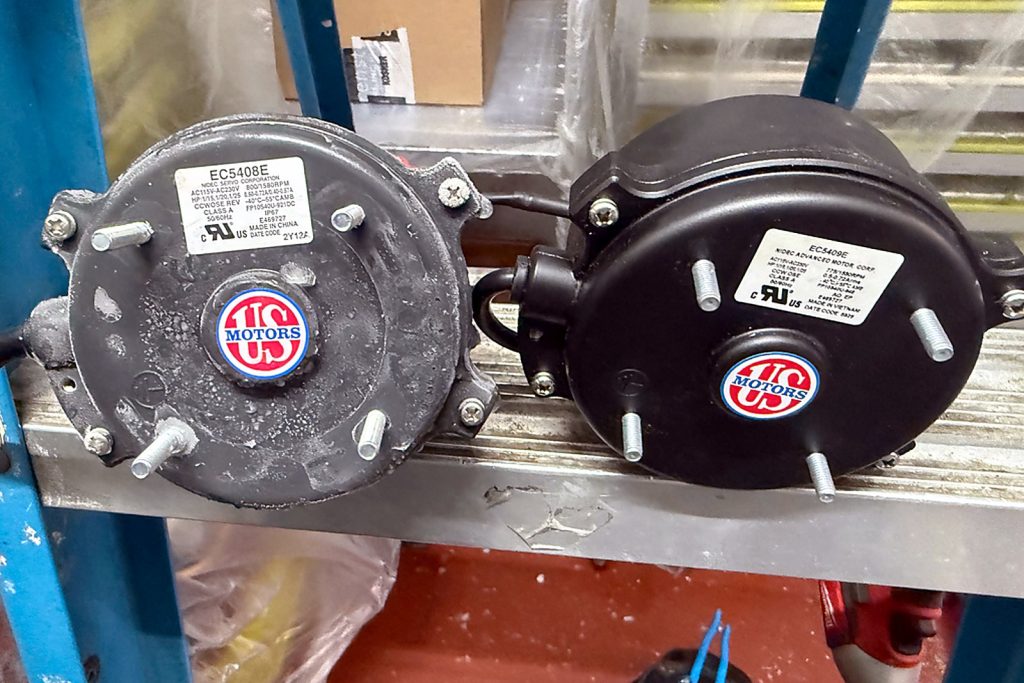
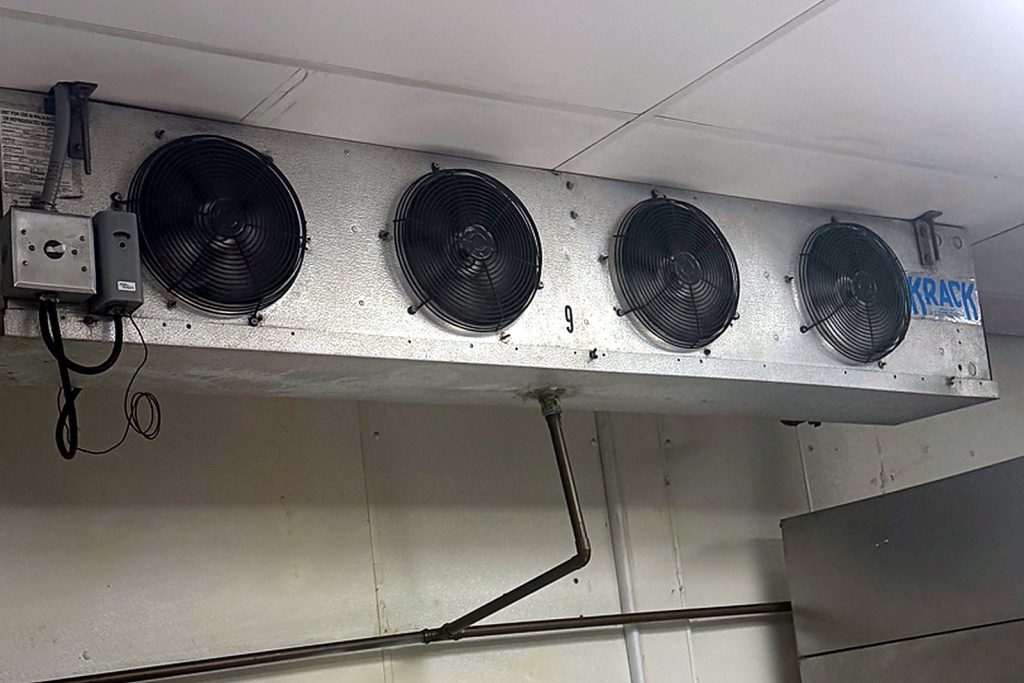
- Two US Motors EC5409E electronically commutated fan motors fitted to the four-fan Krack unit cooler
Visit one: the call
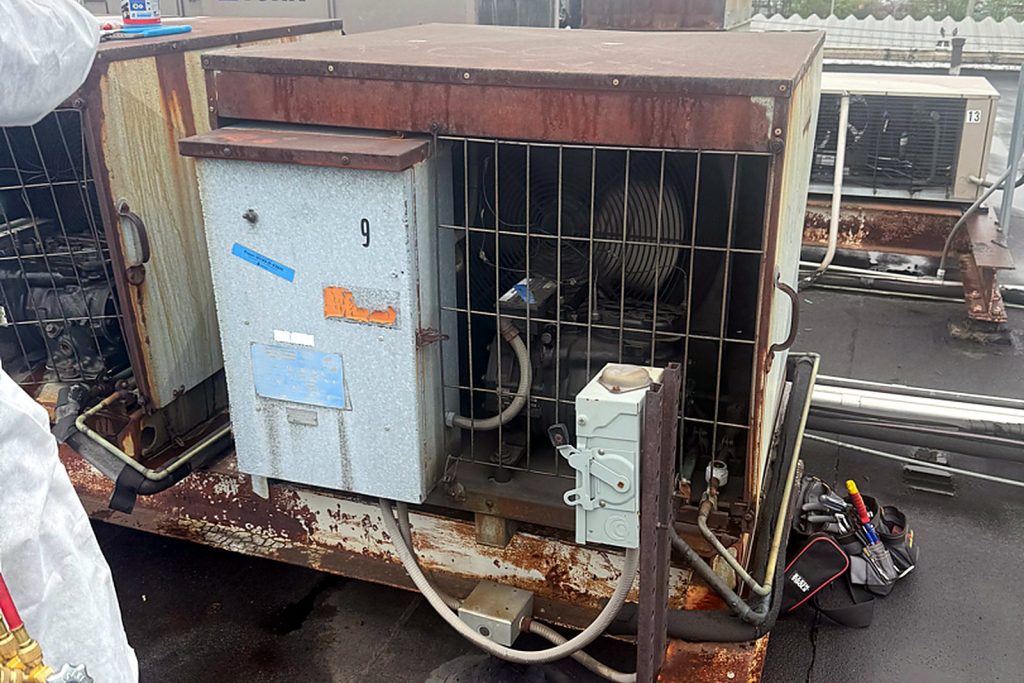
A catering kitchen’s walk-in was not pulling down. The compressor was running on the roof, the box was sitting warm, and the gauges said the evaporator was being starved: low suction pressure, high superheat. That combination points at one part before anything else.
What we found
The thermostatic expansion valve is the metering device at the inlet of the evaporator. It feeds exactly as much liquid refrigerant as the coil can boil off, no more and no less, by sensing the temperature at the coil outlet through a bulb strapped to the suction line. When the valve’s power element loses its charge, or the pin sticks, it stops opening. The coil gets a trickle: the first rows frost, the rest run dry, and the compressor pulls on a near-empty evaporator. From the kitchen it just looks like a warm box.
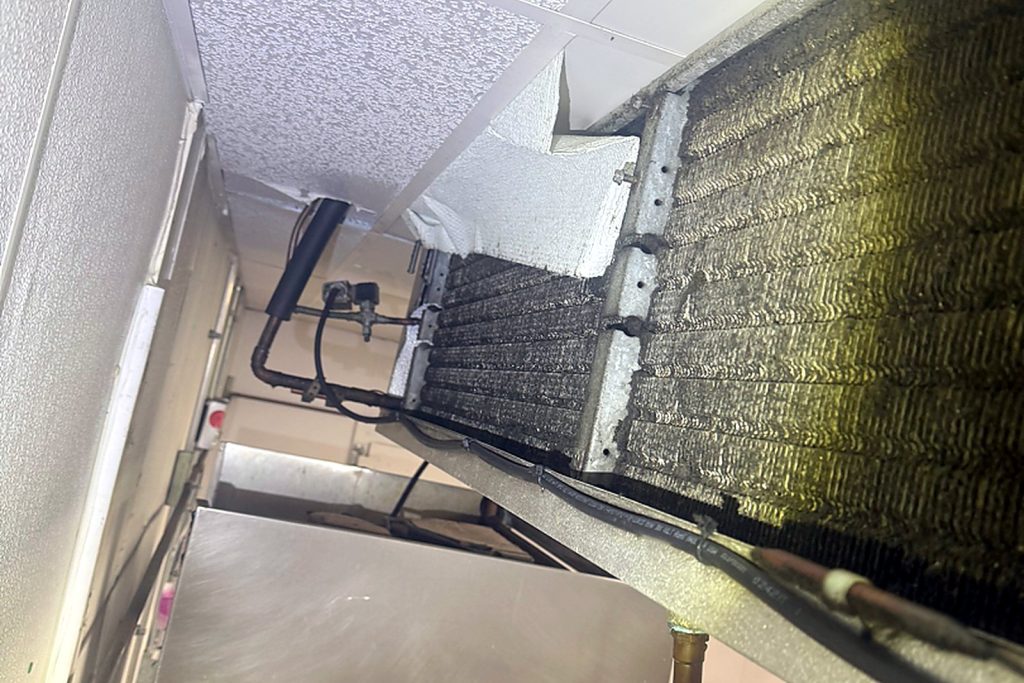
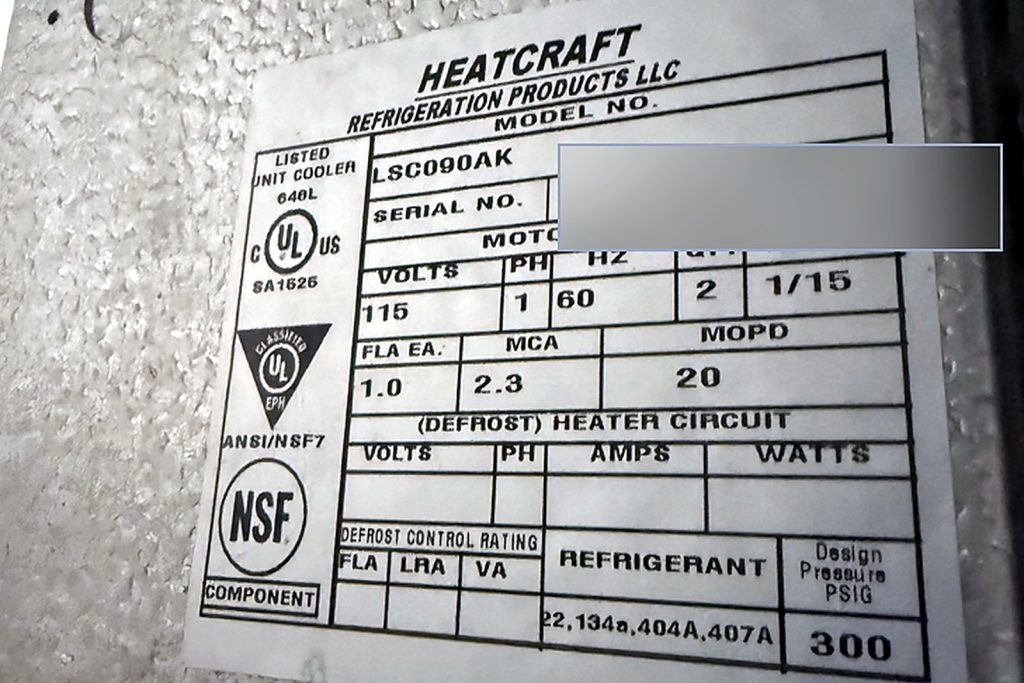
The unit cooler is a Heatcraft LSC090AK, a low-profile ceiling unit with two 1/15 HP fan motors on 115 volts, rated for R-22, R-134a, R-404A and R-407A. It is fed by a Sporlan EFSE-1-C, a one-ton R-404A valve with an external equaliser. The coil face was dark with kitchen grime, which is worth knowing about a box that has to be cleaned around a catering schedule.
The work, in order
- Same valve back in: a new Sporlan EFSE-1-C brazed at the evaporator inlet.
- New drier on the liquid line.
- System evacuated.
- Bulb strapped and insulated on the suction line at the correct position, the step people rush. Strapped loose, on top of the line or sitting in a draught, the valve reads the wrong temperature and meters wrong from day one.
- Superheat checked once the system settled.
Visit two: the building side
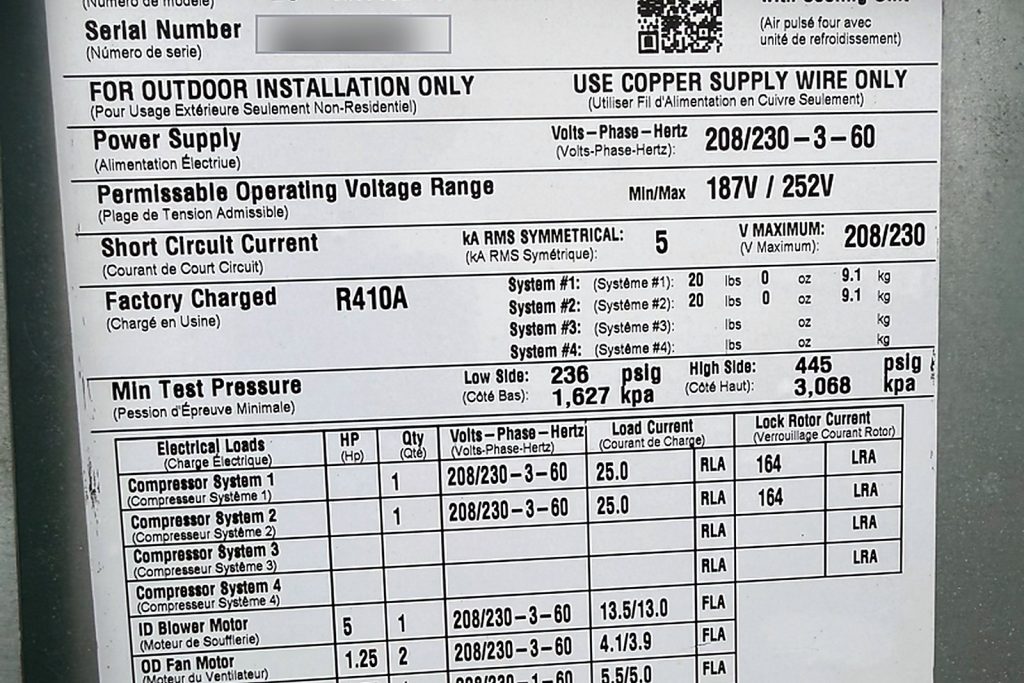
A few days later we were back at the same kitchen for the HVAC: a 15-ton packaged rooftop unit with two compressors on two independent R-410A circuits, and a list. None of it was an emergency, which is the point.
- Blower belt. The old BX70 was glazed and cracked. A belt like that slips under load, the blower slows and airflow across the coil drops, the same starvation that ices an evaporator, arrived at from a different direction. New BX70 fitted and tensioned.
- Filters. A full rack of 18x24x2 pleated filters.
- Thermostat. The round Honeywell in the kitchen pulled from 68 to 65 to make the unit call, and the supply air checked while it ran.
- Walk-in fan motors. Two evaporator fan motors for the site’s four-fan Krack unit cooler, replaced with US Motors EC5409E electronically commutated motors: 30 to 50 W, 115 to 230 V, 1550 / 775 rpm, 0.72 A maximum at 115 V. The motors that came out carried an earlier EC5408E label. The new motors run cooler in the box, which is heat you are not paying to remove twice.
Equipment and parts
| Walk-in unit cooler | Heatcraft LSC090AK low-profile, 115 V, two 1/15 HP fan motors, 1.0 A each, design pressure 300 psig |
| Expansion valve | Sporlan EFSE-1-C, 1 ton, R-404A, external equaliser, replaced like for like with a new liquid-line drier |
| Condensing unit | Air-cooled unit on the roof |
| Rooftop unit | 15-ton packaged unit, 208/230 V 3 ph 60 Hz, two compressors 25.0 A RLA / 164 A LRA, two R-410A circuits at 20 lb each, 5 HP indoor blower, two 1.25 HP condenser fans, test pressures 236 / 445 psig |
| Belt | BX70, new, tensioned |
| Filters | 18x24x2 pleated, full rack |
| Fan motors | Two US Motors EC5409E ECM, 30 to 50 W, 115 to 230 V, 1550 / 775 rpm, in a four-fan Krack unit cooler |
| Thermostat | Honeywell round, kitchen |
What this means if you manage the building
A failing expansion valve looks like low charge. Gauges and a thermometer tell them apart; guessing and adding gas does not, and it leaves the real fault in place. The second visit is the other half of the story: a belt, a rack of filters and two fan motors on a weekday morning cost less than any one of them failing on a Saturday night, and one contractor covered the refrigeration and the HVAC on the same site, on one schedule.
From the job log: The valve that meters everything (scheduled for 22 Oct 2026, link follows); A belt, a rack of filters and two fan motors (scheduled for 19 Nov 2026, link follows).