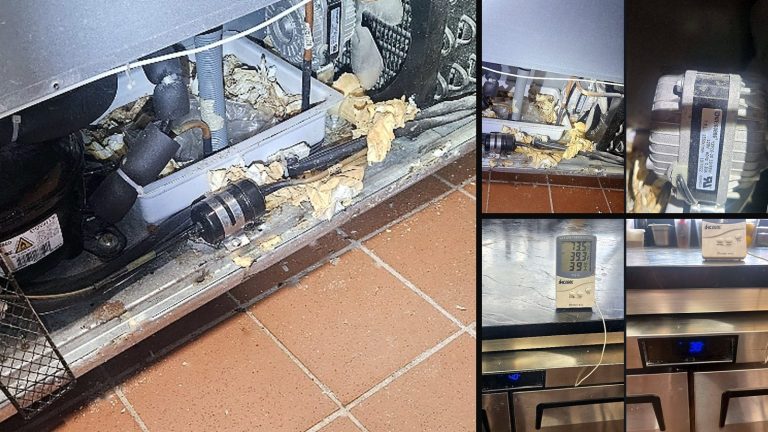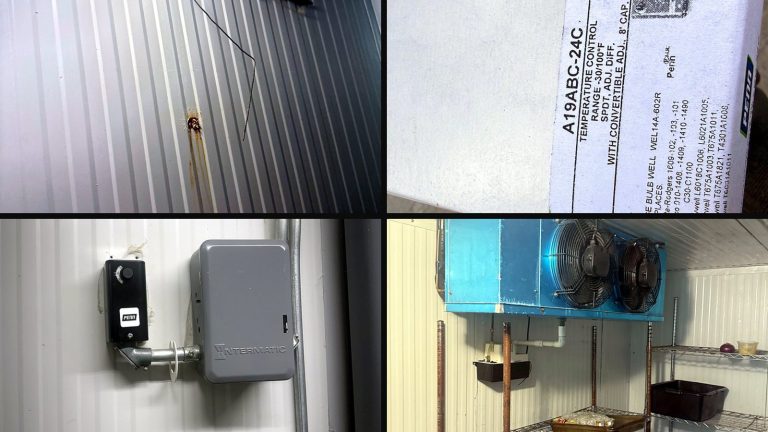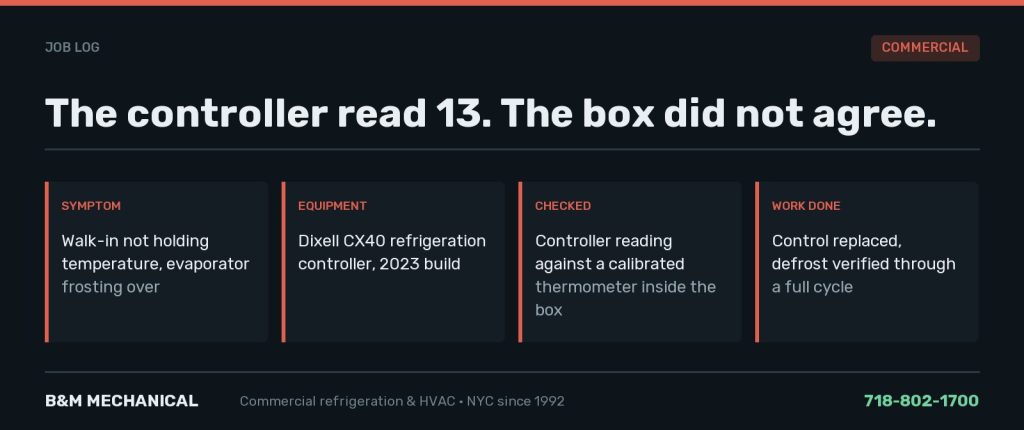
The controller on the front of the box was reporting 13 and looked perfectly happy about it.
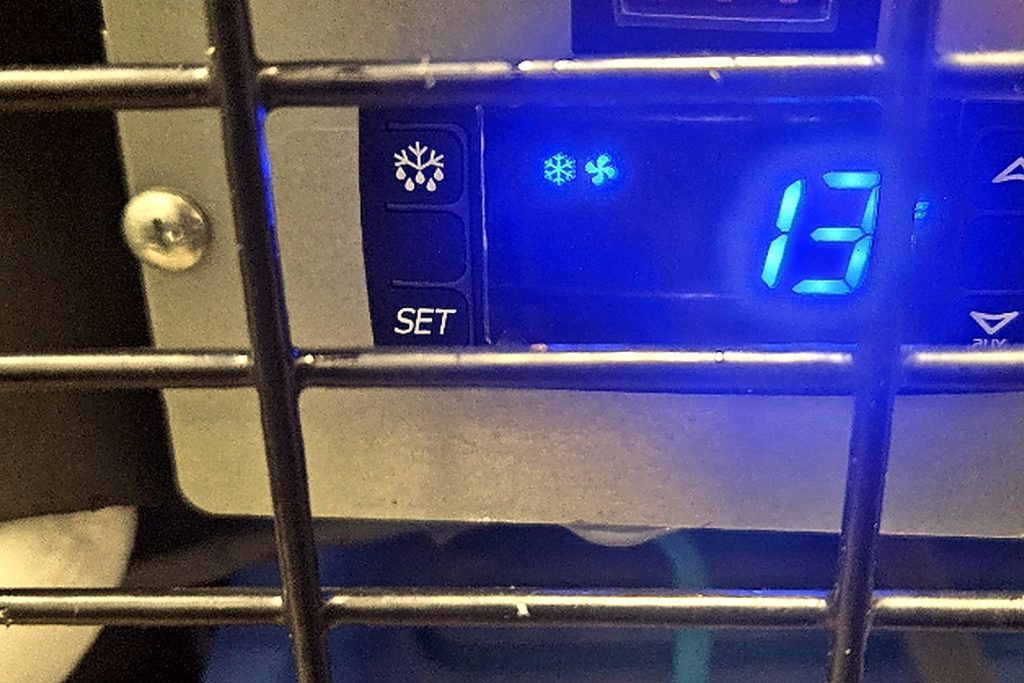
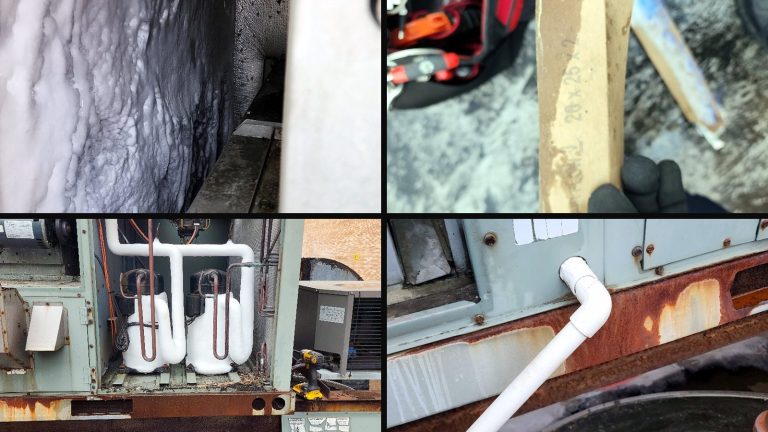
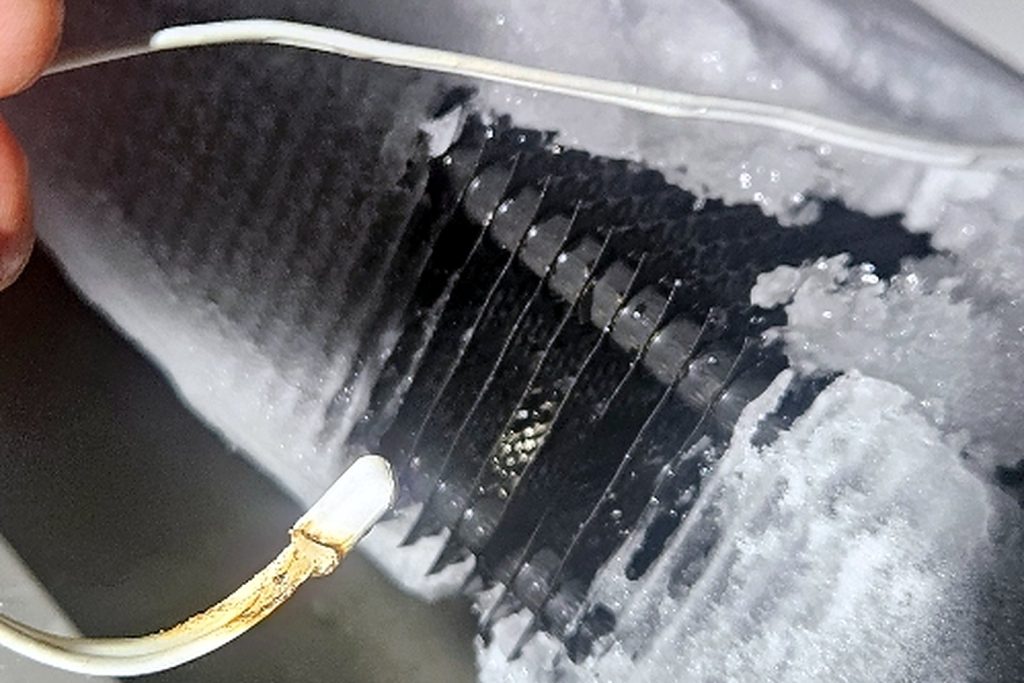
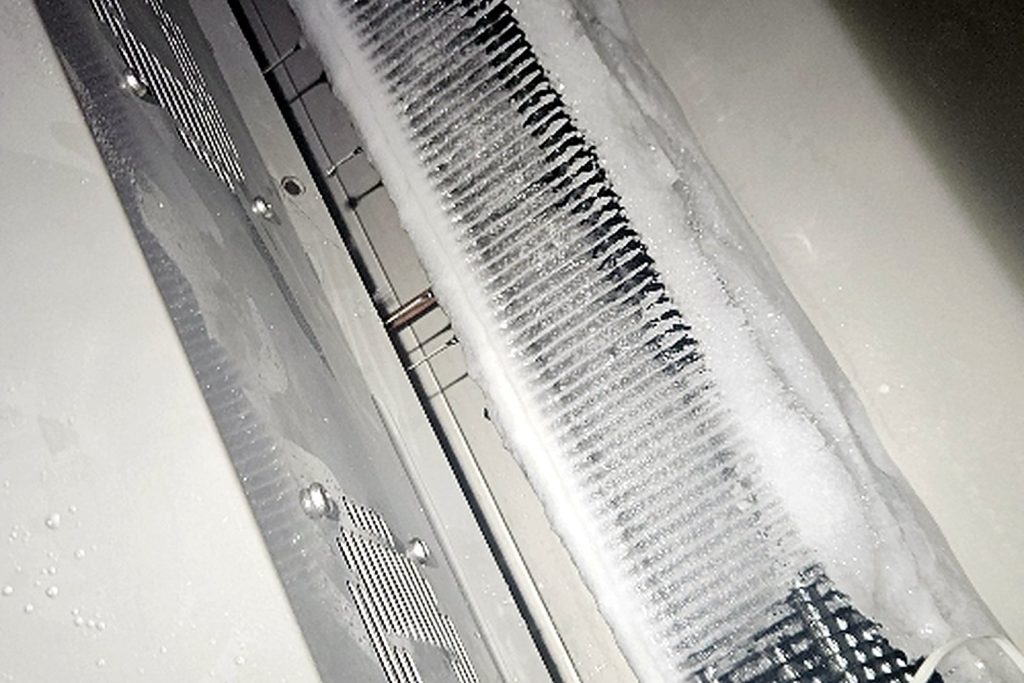
The product inside the box disagreed, and so did the evaporator, which was frosting over.
A refrigeration controller only knows what its probe tells it. If the probe drifts, sits in the wrong place, or the control itself starts misreading, the display becomes a confident, precise, wrong number — and everything downstream of that number goes wrong with it. Including defrost, which is timed and triggered off the same control.
That’s the part operators don’t expect. A bad temperature control doesn’t just report the wrong number. It runs the box to the wrong number, and it runs defrost on the wrong schedule, which is how you end up with a coil frosting over and a display insisting everything is fine.
First step is never to trust the display. Put a calibrated thermometer in the box, in the product zone, and compare it against what the controller claims. That single check tells you whether you’re chasing a refrigeration fault or a control fault — two completely different repairs.
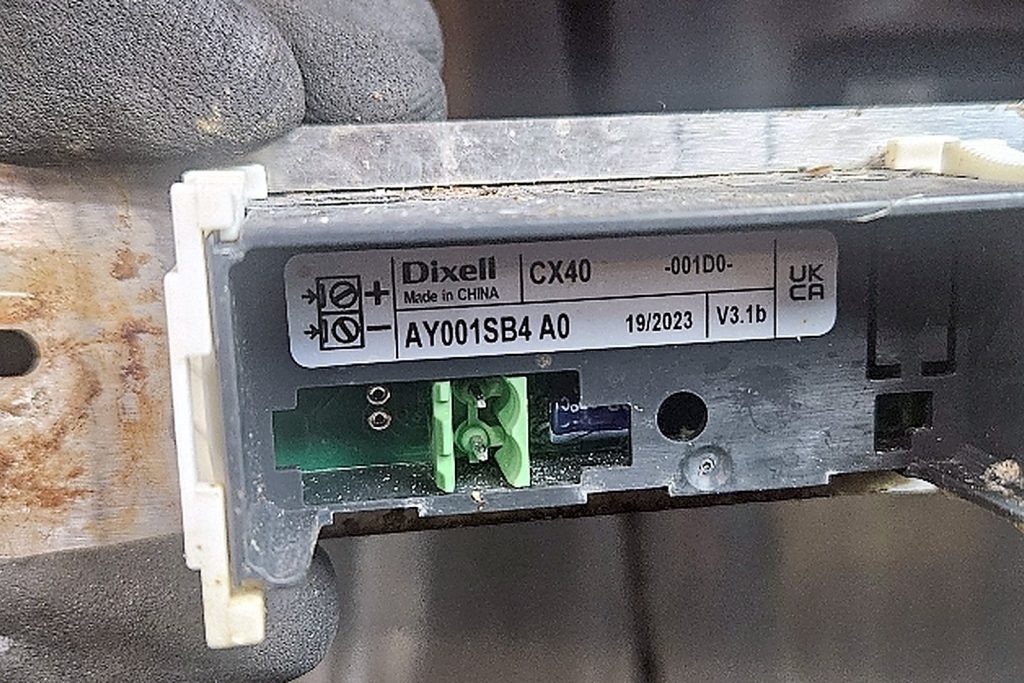
Here it was the control. A Dixell CX40, replaced, then defrost verified through a full cycle rather than assumed — because a new control on a wrong defrost setting will ice the coil right back up and look like the same fault returning.
If you take one thing from this: the number on the front of your walk-in is a claim, not a measurement. A ten-dollar thermometer sitting in the box is how you find out whether that claim is true — and it’s the cheapest piece of refrigeration equipment you will ever buy.
If it heats or cools, we handle it. 📞 718-802-1700
Service: Walk-in cooler and freezer repair.