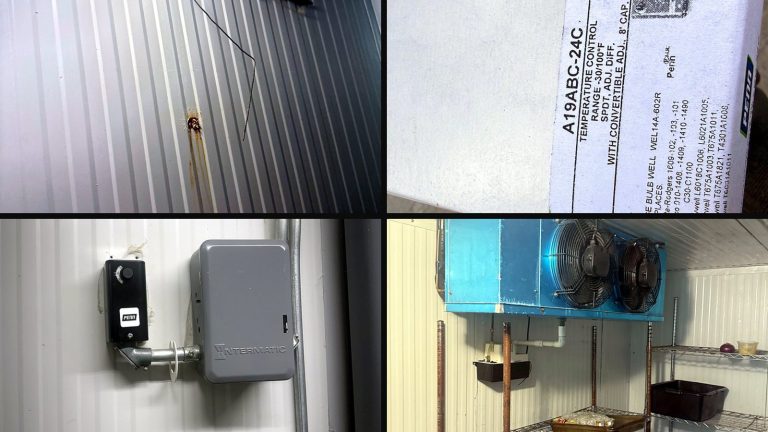
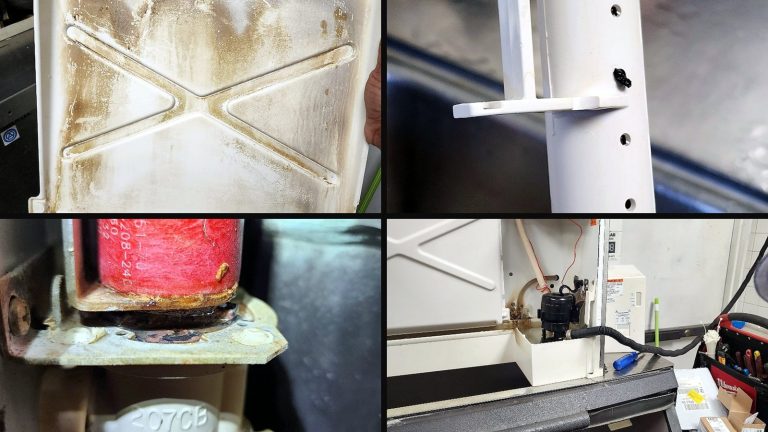
Counter-service kitchen, goes through ice all day. The complaint was simple: “it’s making ice, there’s just never any ice.”
Both halves of that sentence were true.
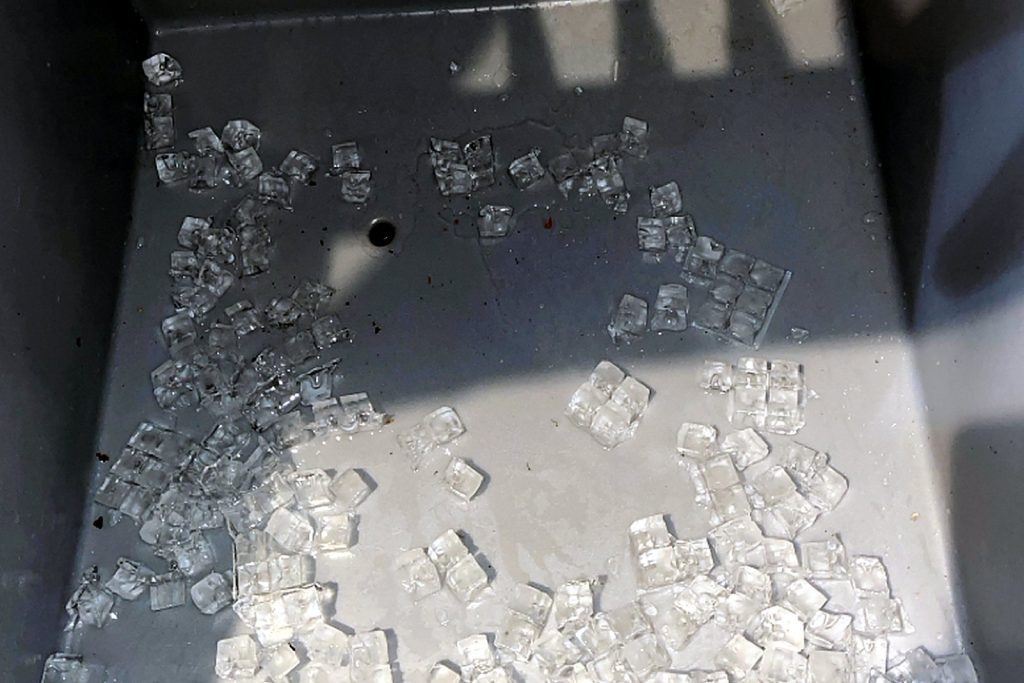
This is what was coming out of it. Not cubes — shells. Hollow on one side, part of the cube never formed at all, and what did form fell apart in your hand.
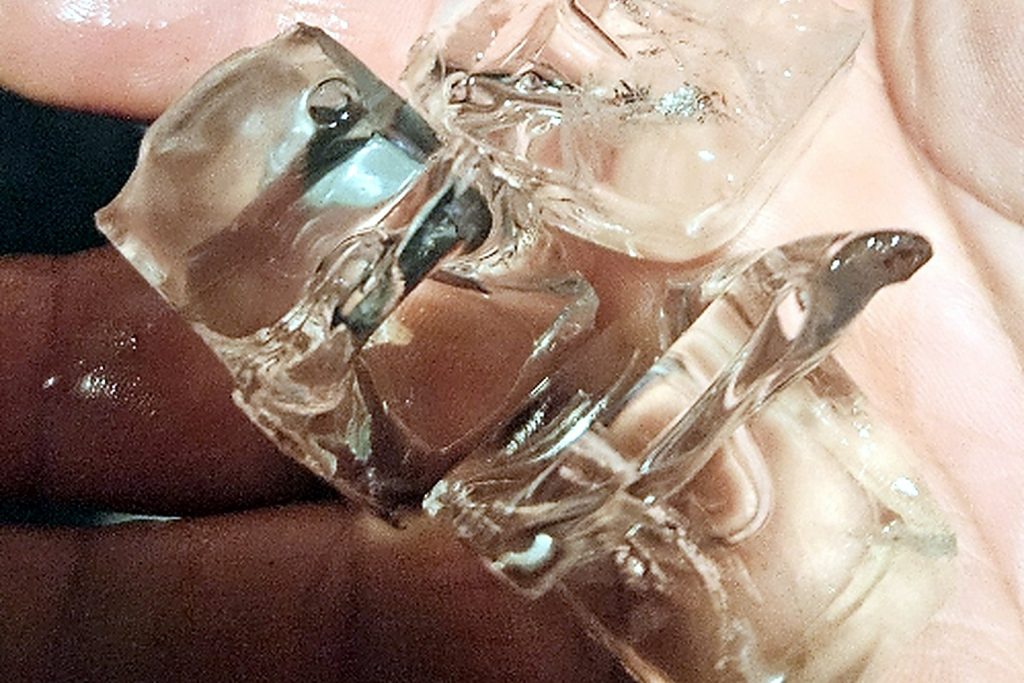
Ice like this melts about three times faster than a solid cube. So even on the runs where the machine did produce, the bin was empty again twenty minutes later. Staff assumed they were just busy.
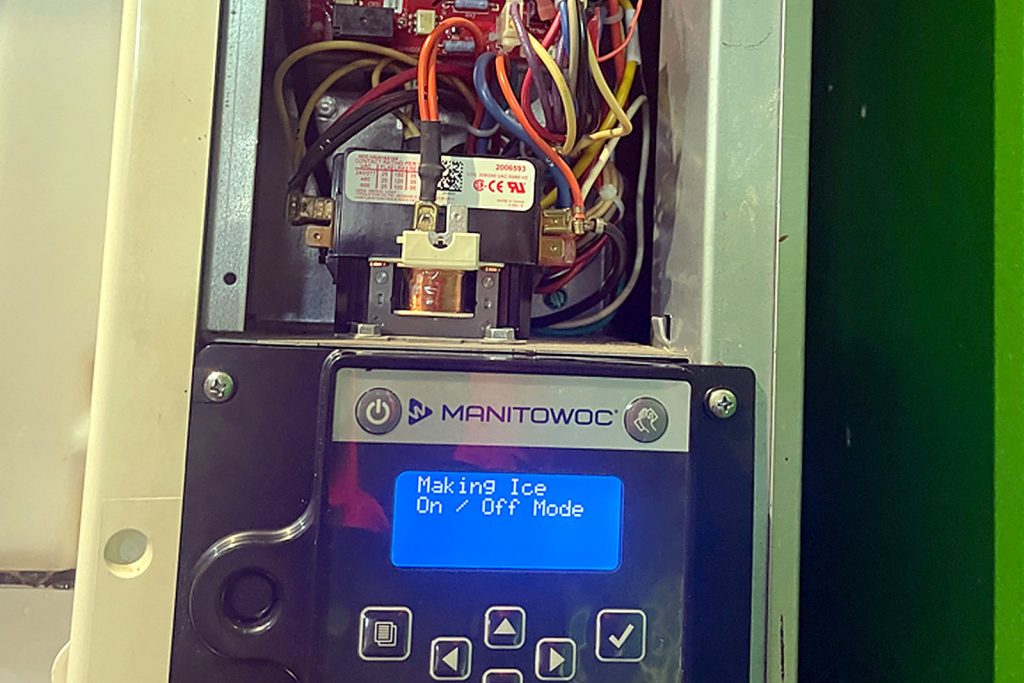
Here’s the part that keeps this problem alive for months: the controller was reporting Making Ice the entire time. No fault code. No alarm. No red light. A Manitowoc ID0606A Indigo head is a genuinely smart machine, but it reports on its own cycle, not on whether the cube at the end of that cycle is any good. It was running its sequence exactly as designed. The output was garbage.
Hollow, incomplete cubes almost always mean the freeze cycle is ending before the cube is finished. And the most common reason a cuber can’t finish a freeze cycle is that it can’t get rid of heat fast enough.
Which brings us to the cheapest part in the entire machine. The air filter.
On an air-cooled unit, everything the condenser needs comes through that panel. Let it load up with kitchen grease and dust and the condenser can’t reject heat, head pressure climbs, the freeze cycle can’t complete, and you get shells instead of cubes. The machine doesn’t know it’s suffocating. It just keeps running the sequence.
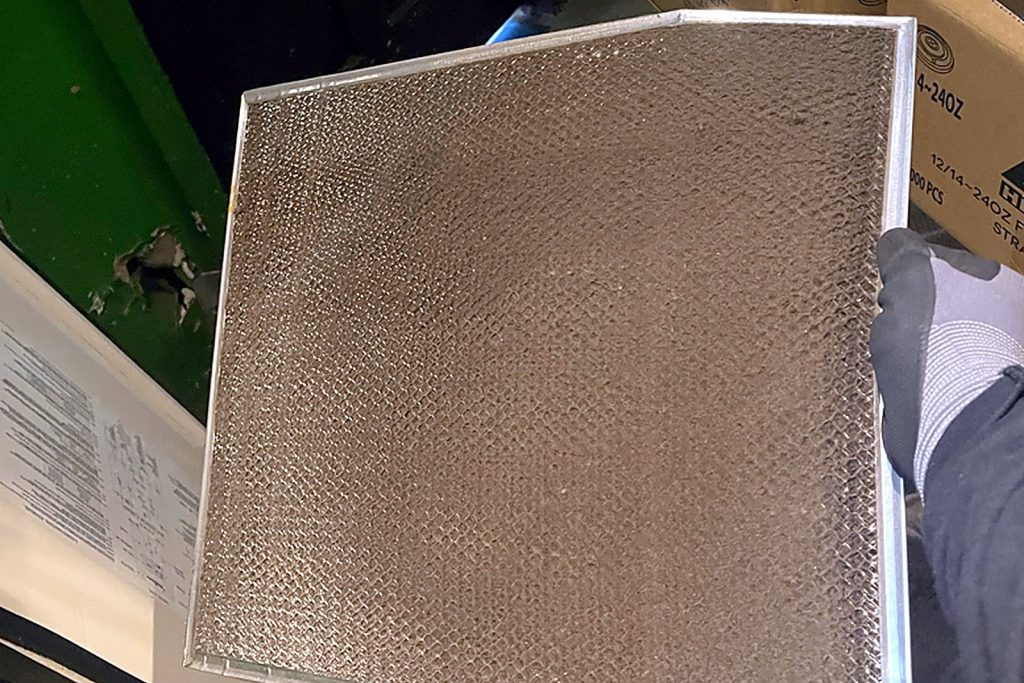
That filter slides out by hand. No tools. Nobody needs a technician to check it, and in a kitchen this busy it wants looking at monthly, not annually.
If your ice is hollow, cloudy, or melting faster than it used to, the machine is already telling you something is wrong upstream. Waiting until it stops completely is the expensive version of this repair.
If it heats or cools, we handle it. 📞 718-802-1700