
Butcher’s cold room: a blocked drain, two evaporators and a new expansion valve in one visit
- Scope
- Cold-room refrigeration service: evaporator drains, condensate pump, thermostatic expansion valve, line insulation
- Timeline
- One visit
- Tonnage
- 1.5-ton expansion valve
- Location
- New York City
- Year completed
- 2026
- What was delivered
-
- Both evaporator drain pans removed, scrubbed and sanitised
- Drain lines flushed
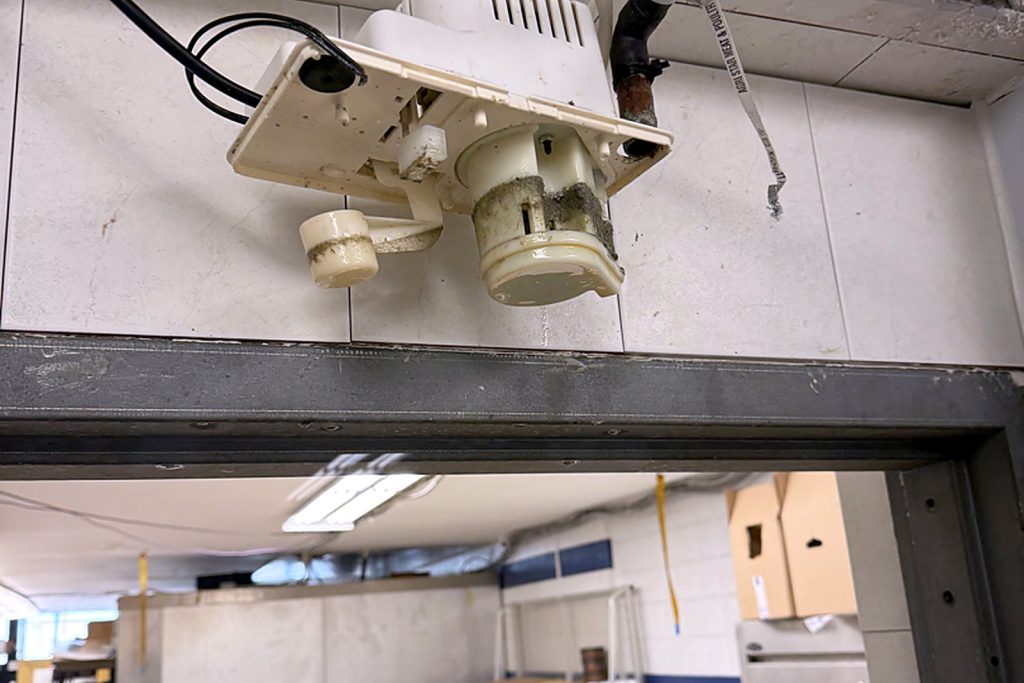
- Condensate pump above the door checked, check valve cleared
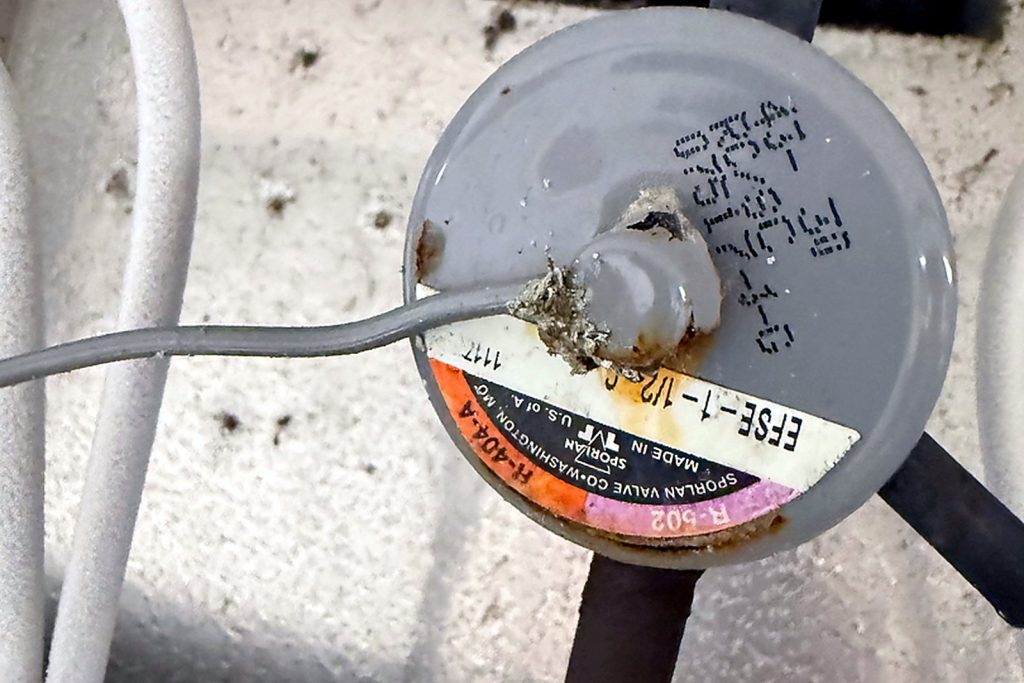
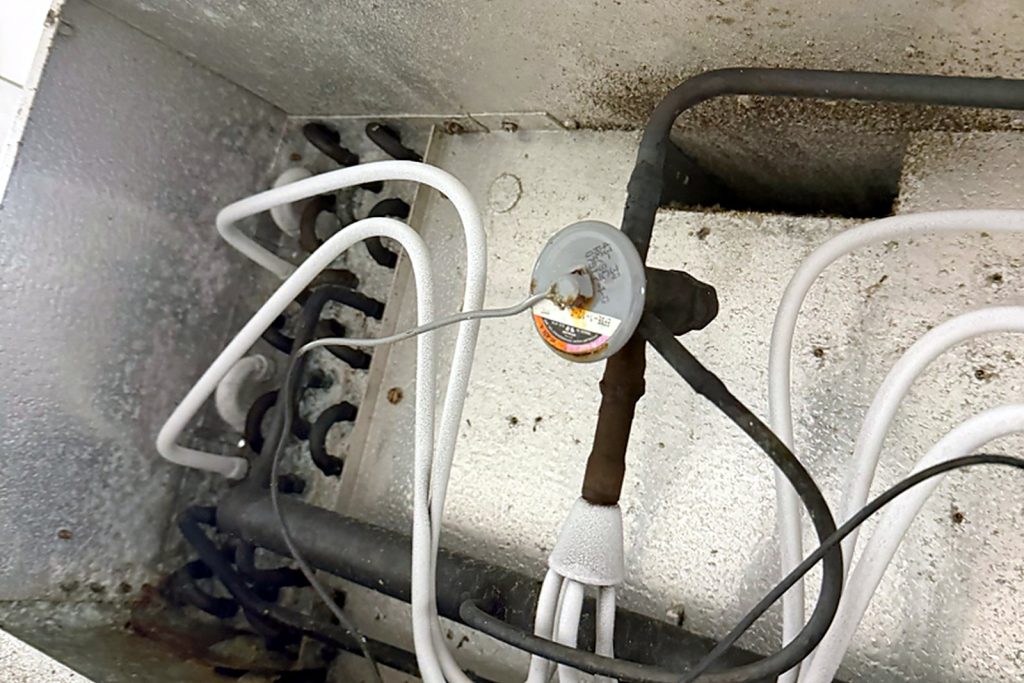
- Sporlan EFSE-1-1/2-C expansion valve replaced, new liquid-line drier
- System evacuated, superheat set
- Suction lines re-insulated where the old insulation had failed
The call
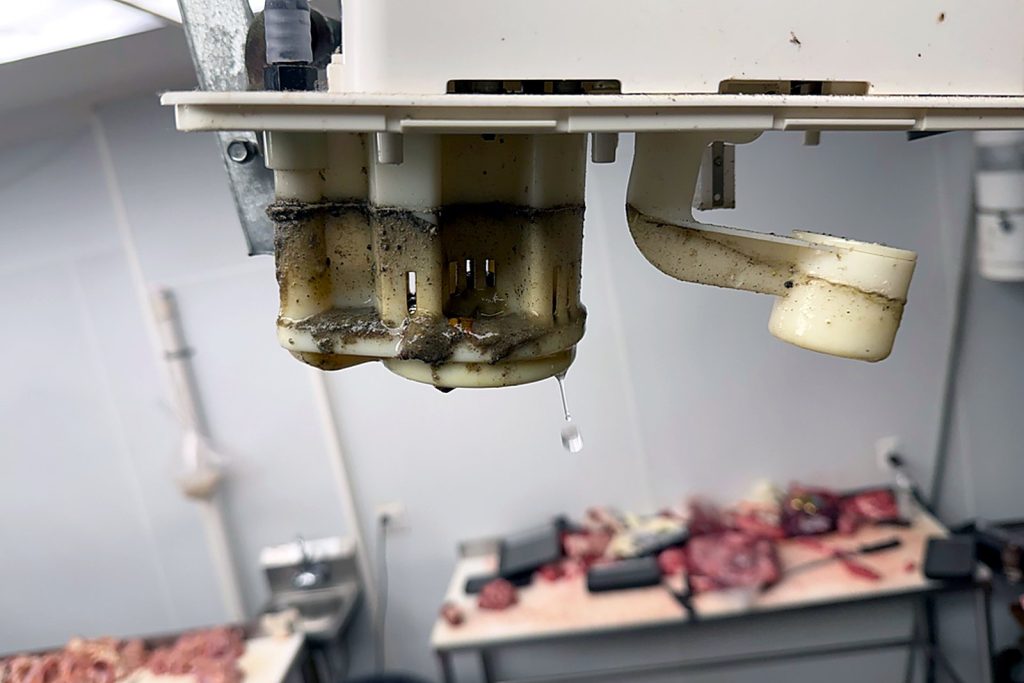
A butcher’s cold workroom. Water was dripping from the ceiling unit onto the cutting bench below it. In a room where meat is cut, that is not a nuisance, it is a health inspection waiting to happen, so it went to the top of the day.
What we found
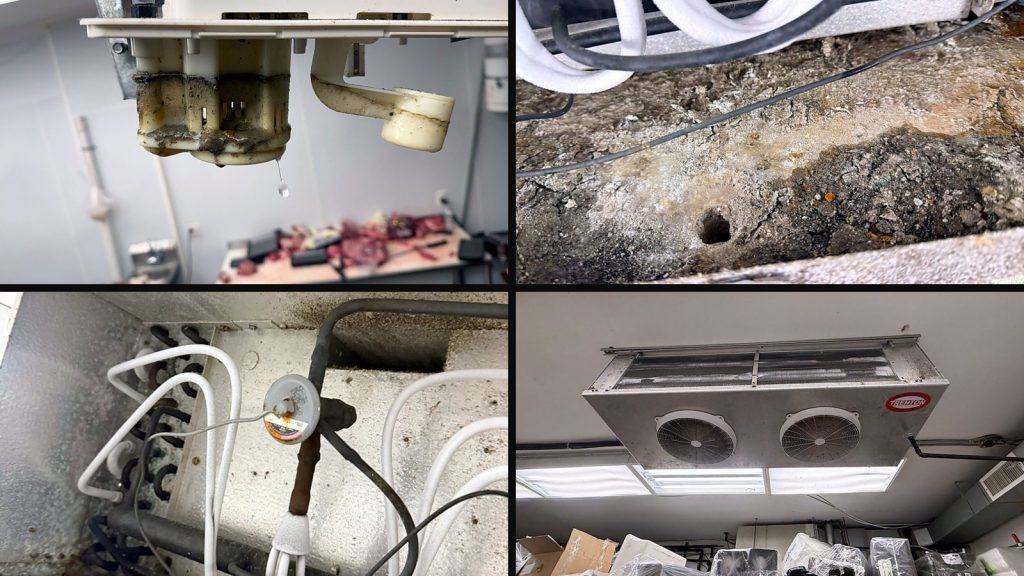
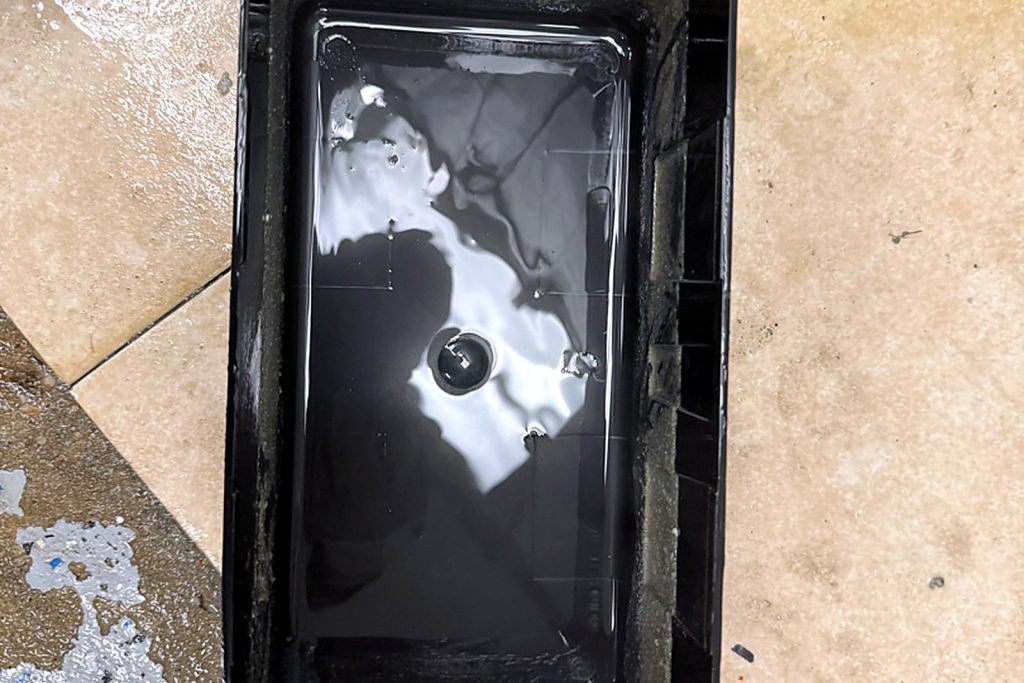
The drip was coming off the drain fitting under the evaporator. Pulling the drain pan explained it: a thick layer of grey sludge, fat and protein carried on the air and settled into the condensate, had built up until it blocked the outlet. Water had nowhere to go but over the lip of the pan.
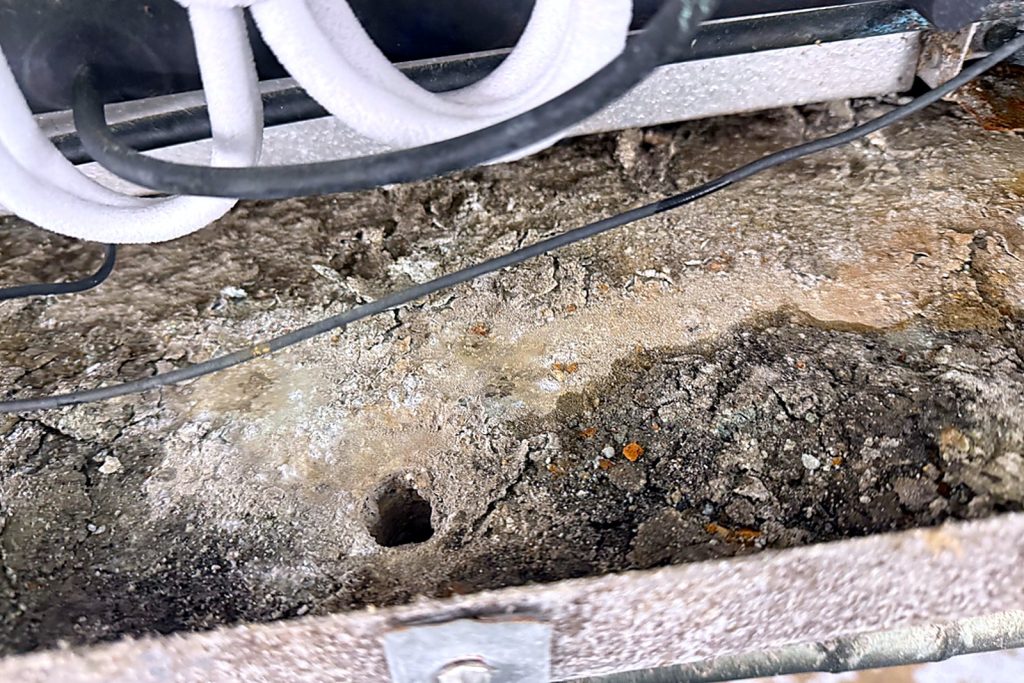
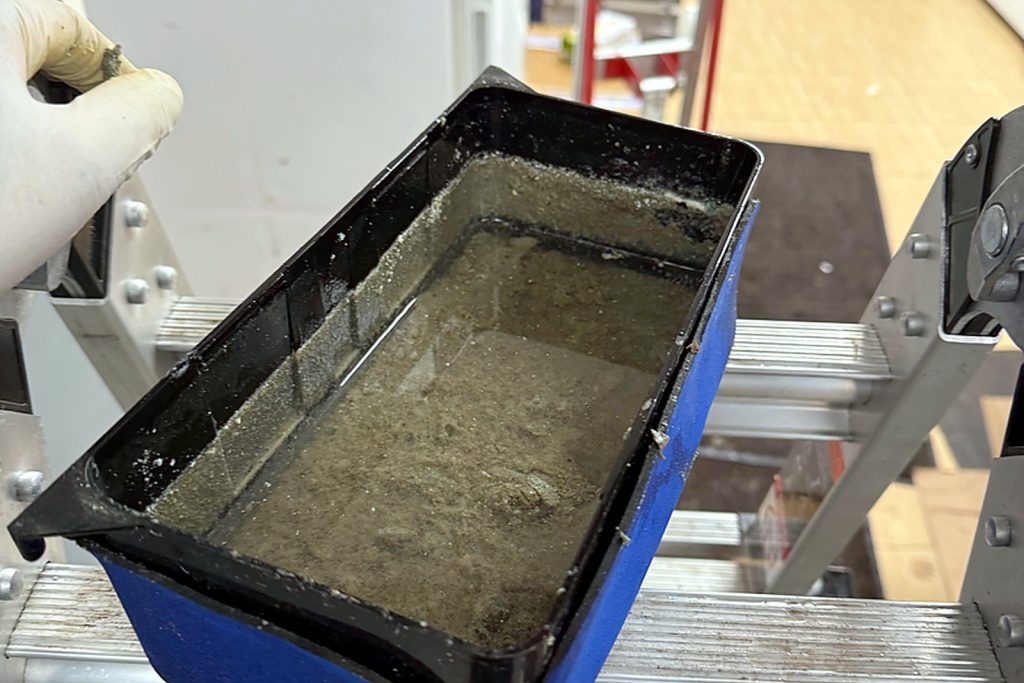
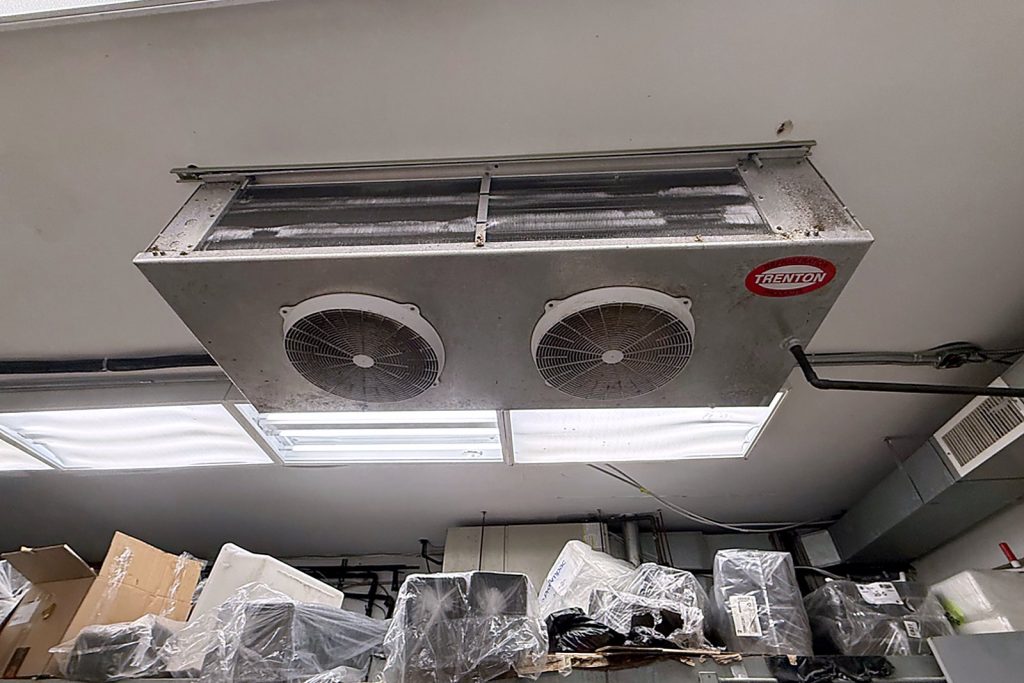
Once the unit was open it turned into a list, which is normal for a cold room that has gone a while without service. The thermostatic expansion valve at the coil inlet was an old Sporlan EFSE-1-1/2-C, a 1.5-ton R-404A valve, with corrosion where the capillary enters the power element. The drain line runs to a condensate pump mounted on the wall above the cold-room door, and the pump’s reservoir carried the same sludge line as the pan. The room’s second evaporator, a Trenton two-fan unit, was on its way to the same state as the first.
The work, in order
- Both drain pans out, scrubbed and sanitised.
- Drain lines flushed through.
- Condensate pump checked and its check valve cleared.
- New Sporlan expansion valve brazed in at the evaporator inlet with a new liquid-line drier.
- System evacuated and superheat set with the box running.
- Suction lines re-insulated where the old insulation had gone.
Equipment and parts
| Room | Meat cutting room served by two ceiling evaporators, one of them a Trenton two-fan unit cooler |
| Expansion valve | Sporlan EFSE-1-1/2-C thermostatic expansion valve, 1.5 tons, R-404A, replaced like for like with a new drier |
| Condensate | Wall-mounted condensate pump above the cold-room door, check valve cleared |
| Refrigerant | R-404A; system evacuated and superheat set after the valve change |
| Insulation | Suction lines re-insulated |
What this means if you manage the building
Drain pans in a room where food is cut need cleaning on a schedule, every quarter at least. Sludge in a pan is invisible until it is on the bench, and by then it is an inspection problem, not a refrigeration one. The second lesson is about the visit itself: when the unit is open anyway, look at everything, because the second problem is always cheaper to fix on the same visit than on a callback.
From the job log: Water on the cutting bench (scheduled for 24 Nov 2026, link follows).