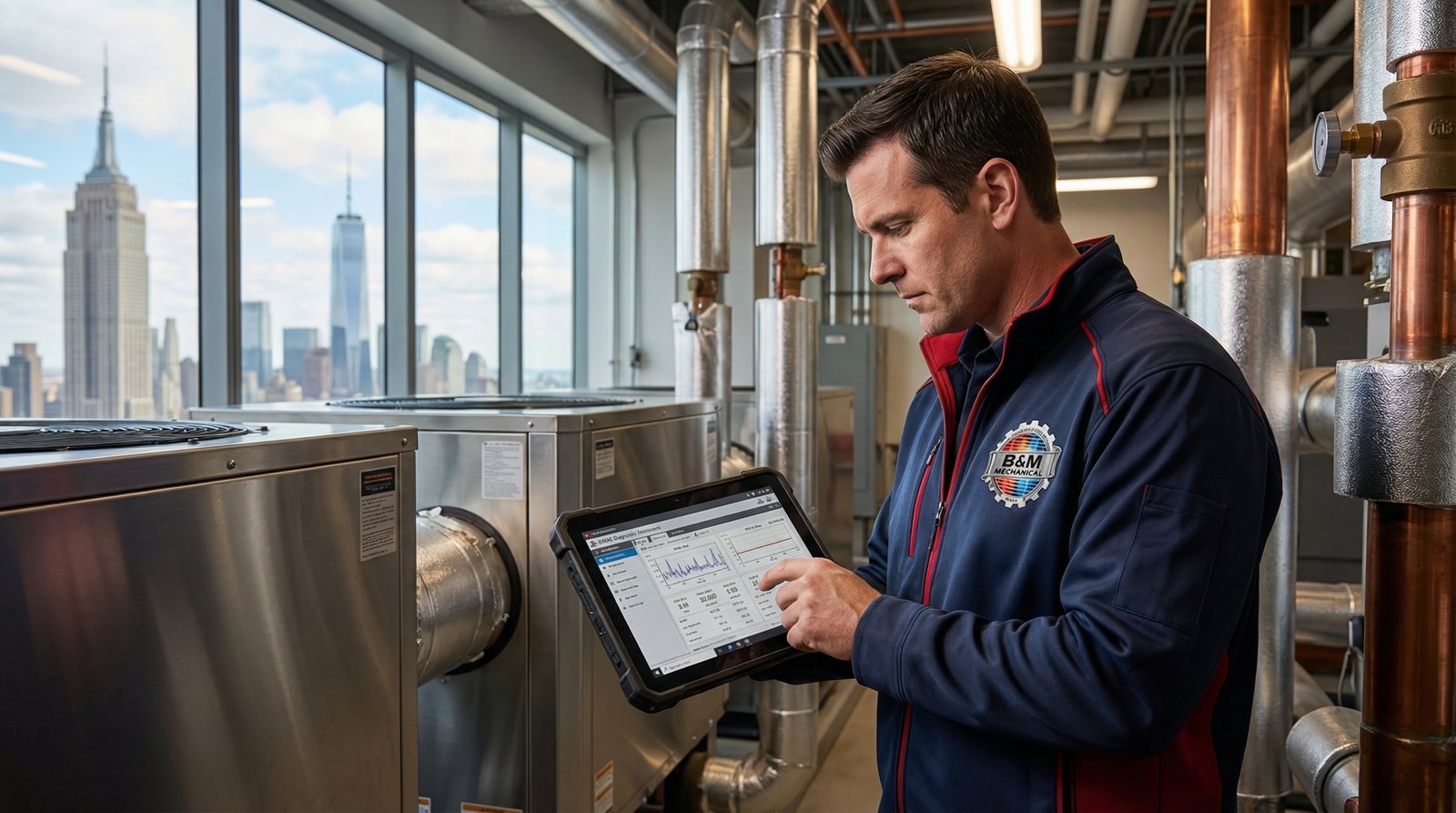
Navigating NYC's Commercial Refrigeration Future: Compliance, Efficiency, and Health
Explore how stringent NYC regulations, cutting-edge refrigeration technologies, and proactive maintenance strategies are transforming the food service industry, ensuring compliance and optimizing operational costs.
Navigating NYC's Strict Commercial Refrigeration Regulations
New York City's commercial food service industry operates under an exceptionally stringent regulatory framework, presenting both significant challenges for operators and unique opportunities for expert HVAC providers. Compliance with these mandates is not optional; it's a critical factor in avoiding severe financial penalties and operational disruptions. B&M Mechanical positions itself as an indispensable compliance partner, guiding businesses through this complex landscape.
Key regulations include the NYC Health Code Article 81, which mandates strict temperature controls for food safety. Potentially hazardous cold foods must be maintained at or below 41°F, a standard updated in 1998 to align with FDA recommendations. This code also dictates rapid cooling procedures for cooked foods and requires precise thermometer calibration, a technical process B&M Mechanical can help clients master.
Beyond health codes, Local Law 97 (LL97) imposes ambitious carbon caps on large buildings, aiming for a 40% reduction in greenhouse gas emissions by 2030. Commercial kitchens, with their high energy consumption, are particularly vulnerable to LL97 penalties, which can reach $268 per metric ton of CO2 equivalent emissions. Modernizing inefficient systems, such as implementing demand-controlled ventilation, is crucial for compliance.
Further complicating the environment is Local Law 77, regulating the transition to A2L refrigerants. These mildly flammable, low-GWP alternatives require specialized installation protocols, including integral refrigerant detection systems, multi-level ventilation, and specific fire ratings for shaft enclosures. B&M Mechanical's unparalleled technical expertise ensures safe and compliant integration of these advanced refrigerants, preparing businesses for the future while mitigating environmental impact.
💡 Non-compliance with NYC's Local Law 97 can result in penalties of $268 per metric ton of CO2 equivalent emissions above allowable limits.

Embracing Innovation: The Future of Efficient Refrigeration
The commercial refrigeration sector is undergoing a significant technological evolution, moving away from outdated mechanical systems towards intelligent, high-efficiency architectures that promise substantial energy savings and reduced carbon footprints. B&M Mechanical is at the forefront of implementing these innovations, helping NYC businesses modernize their operations.
A major shift involves the adoption of natural refrigerants like R290 (Propane) and R744 (Carbon Dioxide) as alternatives to high-GWP HFCs such as R404A. R290, for instance, boasts a GWP of just 3 compared to R404A's 3,922, and offers 10% to 15% higher energy efficiency. These systems also require significantly lower refrigerant charges, contributing to both safety and environmental benefits.
Variable Speed Compressors (VCCs) represent another critical advancement. Unlike traditional fixed-speed compressors that cycle on and off, VCCs adjust their operational speed to precisely match real-time cooling demands. This dynamic modulation leads to substantially higher energy efficiency, lower overall consumption, and faster temperature recovery after events like door openings, minimizing energy waste.
Looking ahead, the integration of IoT, AI, and cloud technologies is transforming equipment management. AI-powered refrigeration systems can self-diagnose issues, providing predictive analytics to facility managers before minor anomalies escalate into costly failures. Automated controls and smart HVAC systems optimize cooling, defrost cycles, and cleaning tasks, maintaining peak thermodynamic efficiency and significantly reducing manual maintenance.
💡 R290 natural refrigerant systems operate with 10% to 15% higher efficiency and have a Global Warming Potential (GWP) of just 3, compared to R404A's GWP of 3,922.
Global Warming Potential (GWP) Comparison of Refrigerants
Beyond Cold: Ensuring Health and Safety with Ice Machine Maintenance
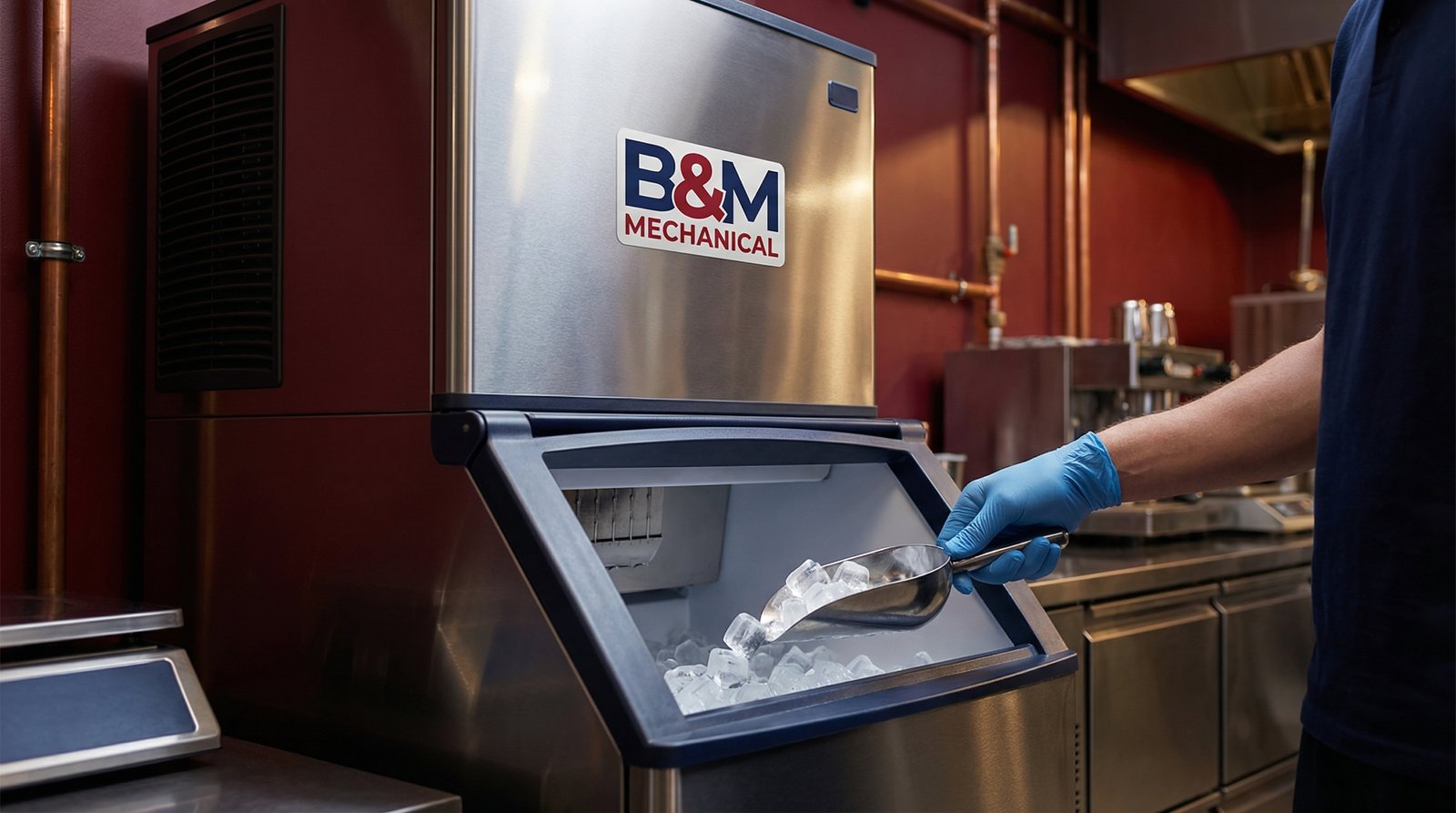
Commercial ice machines, though often overlooked, represent a critical public health vulnerability in food service, hospitality, and healthcare settings. Inadequate maintenance can lead to severe health risks, violate FDA and local health guidelines, and result in immediate health code violations or facility shutdowns. B&M Mechanical emphasizes the importance of rigorous ice machine care to protect both customers and businesses.
These machines are highly susceptible to microbial contamination due to frequent handling, potential water source compromises, and environments conducive to biofilm formation. Biofilms, complex aggregations of microorganisms, provide a protective shield for pathogens, making them resistant to standard cleaning and leading to persistent contamination of the ice.
Epidemiological investigations underscore these dangers. Reports from the CDC have linked contaminated ice machines to serious infections, including Burkholderia multivorans. Other pathogens like E. coli, Salmonella, and Listeria monocytogenes are also commonly associated with ice machines. A multicenter survey revealed that 100% of unmaintained ice machine drain pans harbored Gram-negative bacteria or Candida species, highlighting the pervasive risk.
To mitigate these risks, the CDC and FDA mandate strict cleaning and sanitization protocols. This includes professional descaling to remove mineral deposits, sanitizing with EPA-registered disinfectants, and exhaustive rinsing. Industry best practices recommend deep cleaning and sanitization at least monthly, alongside routine water filter inspections, to ensure food safety and optimal ice production.
💡 A multicenter survey found that 100% of unmaintained ice machine drain pans harbored Gram-negative bacilli or Candida species, posing significant health risks.
The ROI of Proactive HVAC: Why Planned Maintenance Pays Off
The financial disparity between planned preventive maintenance and reactive emergency repairs is a compelling argument for B&M Mechanical's commercial service agreements. Documented industry statistics consistently show that proactive strategies drastically reduce total operational costs, protect valuable inventory, and significantly extend equipment lifespans.
Running commercial refrigeration and HVAC equipment to failure is a fundamentally flawed financial approach. Emergency repairs typically cost 50% to 100% more than scheduled services, with overall costs for neglected equipment being 3 to 10 times higher than those with proper preventive maintenance. This escalation is driven by after-hours labor premiums, expedited parts shipping, and substantial production downtime costs, which can exceed direct repair expenses by 300% to 500%.
Furthermore, unmaintained systems are energy hogs. Well-serviced equipment operates 15% to 25% more efficiently, as dirty coils or low refrigerant levels force compressors to work harder, leading to higher utility bills—potentially increasing by 20% to 30%. Addressing early warning signs with temporary fixes only masks underlying problems, often leading to more expensive secondary damage.
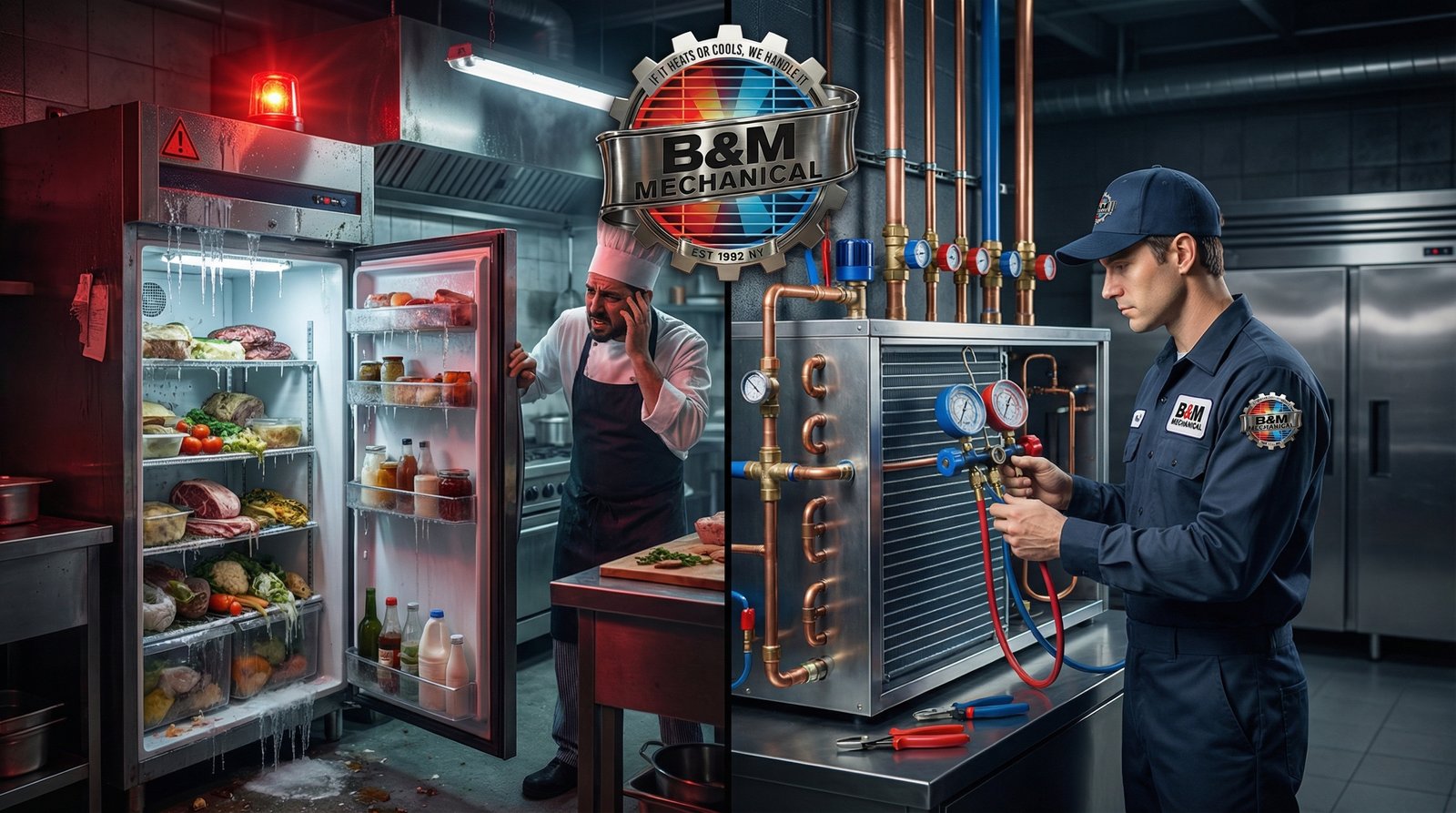
The food service industry faces unique vulnerabilities, where a single refrigeration failure can jeopardize thousands of dollars in perishable inventory and decimate profit margins. Operational downtime is often the most catastrophic metric; a restaurant losing $10,000 in daily sales could face a $3,000 revenue loss from just four hours of closure. Conversely, comprehensive preventive maintenance on HVAC systems yields an extraordinary 545% ROI for facility managers, extending equipment life by 40% to 60% and reducing total maintenance costs by 40% to 50% for proactive organizations.
💡 Preventive maintenance on HVAC systems yields an extraordinary 545% Return on Investment for facility managers, drastically reducing overall operational costs.
Cost Multiplier: Reactive vs. Preventive Maintenance
B&M Mechanical: Your Strategic Partner for NYC HVAC Excellence
B&M Mechanical, with over 30 years of experience since 1992, is uniquely positioned to be the premier HVAC partner for NYC's commercial sector. Our brand is built on a "Kai-Zen" philosophy of continuous improvement and a commitment to permanent solutions, distinguishing us from competitors offering temporary fixes. We leverage AI-driven technology for smarter, faster diagnostics and boast an average emergency response time of less than two hours, a critical advantage in a fast-paced city.
Our marketing strategy aligns with this philosophy, emphasizing the significant ROI of proper maintenance—a documented 545%—against the 3-10x cost multiplier of reactive repairs. We aim to get clients "Off Your Problem List" by addressing root causes, not just symptoms. This approach resonates deeply with facility managers and restaurant owners focused on long-term operational efficiency and risk mitigation.
We strategically optimize our marketing mix for commercial (B2B) and residential (B2C) clients. For B2B, the focus is on risk mitigation, Local Law 97 compliance, equipment uptime, and total cost of ownership, utilizing channels like LinkedIn and technical SEO. For B2C, speed, comfort, and transparent pricing drive local SEO and Google Local Services Ads. This tailored approach ensures we reach the right audience with the right message.
Anticipating seasonal demand fluctuations, B&M dynamically allocates marketing budgets. Shoulder seasons are ideal for promoting planned maintenance agreements and compliance audits. During peak summer heatwaves or winter freezes, the focus shifts to capturing high-intent "near me" emergency search traffic, capitalizing on our rapid response time and proven reliability. This strategic agility ensures B&M Mechanical remains the top choice for NYC's demanding commercial and residential HVAC needs.
💡 B&M Mechanical leverages AI-driven diagnostics for smarter, faster fixes and boasts an average emergency response time of less than two hours across NYC, setting a new standard for service.